




menu

Commercial Rooftop Unit Installation in Dallas – Minimize Downtime with Industrial-Grade RTU Systems

Peak HVAC Seattle delivers commercial rooftop HVAC installation designed for Dallas's demanding climate, ensuring your facility maintains optimal temperature control with minimal business interruption and code-compliant equipment sized for your operational demands.

Slider Image 1
Slider Image 2
Slider Image 3
Slider Image 4
Slider Image 5
Slider Image 7
Slider Image 8
Slider Image 9
Slider Image 10
Slider Image 11

Why Dallas Commercial Buildings Demand Purpose-Built Rooftop Units

Dallas commercial facilities face a brutal combination of sustained triple-digit summers and sudden winter freezes that stress rooftop package units beyond typical design parameters. Your RTU operates in conditions where roof surface temperatures exceed 160 degrees, creating thermal cycling that degrades compressors, contactors, and refrigerant lines faster than units installed in milder climates.

The city's position in Tornado Alley introduces wind load concerns that require proper curb mounting and structural reinforcement. Many Dallas commercial buildings were constructed during the 1980s building boom with flat roof designs that create drainage challenges. Standing water accelerates rust on RTU cabinets and compromises curb seals, leading to refrigerant leaks and premature compressor failure.

Commercial rooftop AC replacement in Dallas must account for the area's electrical infrastructure. Many older buildings in the Design District and Deep Ellum run on outdated 208-volt three-phase systems that limit equipment options. You need an installation team that understands transformer limitations and can properly size disconnect boxes to meet current NEC requirements without triggering expensive electrical upgrades.

Your facility's production schedule cannot accommodate extended HVAC downtime. A failed RTU during July means lost productivity, employee complaints, and potential inventory damage. Proper commercial RTU install prevents these scenarios through load calculations that account for Dallas's 99-degree summer design temperature and humidity levels that regularly exceed 70 percent. Equipment undersized by even one ton will short-cycle, waste energy, and fail years before its expected service life.

Why Dallas Commercial Buildings Demand Purpose-Built Rooftop Units
How We Execute Commercial Rooftop Unit Installation Without Disrupting Operations

How We Execute Commercial Rooftop Unit Installation Without Disrupting Operations

Our commercial rooftop HVAC installation process begins with thermal imaging of your existing unit during peak load conditions. We measure actual amp draw on compressor circuits, check static pressure across coils, and verify refrigerant charge against manufacturer specifications. This diagnostic phase identifies whether you need a complete replacement or if the existing curb and ductwork can support the new unit.

We perform Manual N load calculations specific to your building envelope, not generic rules of thumb. Dallas's solar heat gain through west-facing glass walls requires precise sensible heat ratio calculations. We factor in your internal heat load from servers, machinery, or kitchen equipment. A restaurant needs different CFM delivery than a warehouse, and your RTU must match your actual cooling requirements.

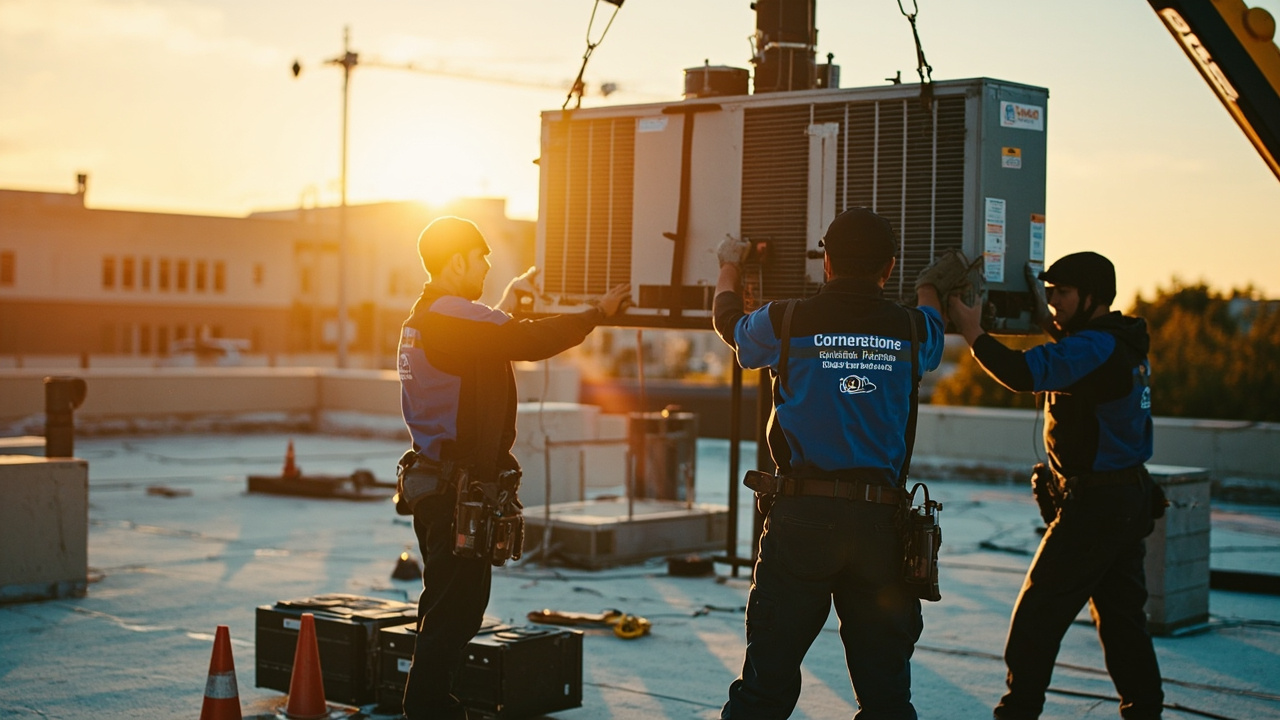
Crane logistics separate professional installations from amateur work. Dallas building codes require permits for rooftop lifts exceeding certain weights, and we coordinate with the city's Transportation Department for street closures when necessary. We schedule crane delivery during your off-hours to prevent disruption. Our rigging team secures the old unit, lifts it clear of parapet walls without damaging roofing membrane, and positions the new package unit with millimeter precision over the curb opening.

Refrigerant line sets require nitrogen purging during brazing to prevent oxidation inside copper tubing. We pull a 500-micron vacuum and hold it for 30 minutes to verify system integrity before charging with refrigerant. Electrical connections use compression lugs rated for Texas heat, not push-on terminals that loosen over time. We verify phase rotation, set low ambient controls for winter operation, and program economizer dampers to maximize free cooling during Dallas's mild spring and fall months.

Our RTU Replacement Timeline for Dallas Commercial Properties

Commercial Rooftop Unit Installation in Dallas – Minimize Downtime with Industrial-Grade RTU Systems
01

Site Assessment and Equipment Specification

We conduct a detailed roof inspection to verify structural load capacity, measure curb dimensions, and assess gas line or electrical service requirements. You receive a load calculation report with equipment recommendations that match your building's cooling demands and budget parameters. We identify long-lead items and coordinate delivery to prevent installation delays that extend your project timeline.
02

Permit Coordination and Logistics

Our team pulls mechanical and electrical permits through the City of Dallas, ensuring compliance with current energy codes and refrigerant regulations. We arrange crane rental and coordinate with your property management to secure roof access. For multi-tenant buildings, we notify adjacent businesses of scheduled work. This phase prevents surprises that delay installation and ensures your project stays on schedule without code violations.
03

Installation and System Commissioning

We complete the physical installation, verify all electrical connections meet torque specifications, and commission the system through multiple cooling cycles. You receive documentation including refrigerant charge weights, electrical measurements, and airflow verification. We program your thermostat or building automation system and train your maintenance staff on filter replacement schedules and basic troubleshooting procedures specific to your new rooftop package unit.

Why Dallas Businesses Choose Peak HVAC Seattle for Commercial RTU Projects

Commercial rooftop unit installation in Dallas requires familiarity with the city's inspection process and code enforcement priorities. The Building Inspection Department flags installations that lack proper curb flashing or use undersized gas lines. We maintain relationships with city inspectors and understand their expectations for duct sealing, electrical disconnect placement, and refrigerant line protection. Your project passes inspection the first time, preventing costly callbacks and extended timelines.

Dallas's commercial construction boom means equipment lead times stretch to 12 weeks for certain tonnage ranges. We maintain relationships with multiple distributors and can source alternative models that meet your specifications when your preferred unit faces backorder delays. For facilities that cannot wait, we offer rental units that provide temporary cooling while your permanent RTU ships and gets installed.

Our technicians hold universal EPA 608 certification and Texas Department of Licensing and Regulation HVAC licenses. We carry general liability coverage that meets the insurance requirements for Dallas commercial properties. Your building owner receives certificates of insurance before we begin work. This protects you from liability if accidents occur during installation.

We understand the operational demands of Dallas businesses. A failed RTU in a medical office means rescheduled patients and lost revenue. A restaurant without air conditioning during dinner service loses customers permanently. We schedule installations during your lowest-traffic periods and maintain backup plans if weather or equipment delays threaten your timeline. You receive daily progress updates and direct contact with the project supervisor, not a call center that cannot answer technical questions about your specific installation.

What to Expect During Your Commercial Rooftop Unit Installation

Installation Timeline and Business Continuity

Most commercial RTU installations complete within two to three days, depending on unit size and roof access complexity. We provide temporary cooling solutions if your facility cannot tolerate downtime. Our crews arrive at your scheduled time with all necessary equipment and materials. We coordinate with your operations manager to minimize noise during business-critical hours. For 24-hour facilities, we stage work during shift changes or low-occupancy periods. You receive a detailed project schedule that outlines each phase, from equipment delivery through final commissioning and inspection approval.

Pre-Installation Assessment and Planning

Our commercial evaluation includes thermal imaging, roof structural analysis, and electrical service verification. We measure existing ductwork to identify restrictions that limit airflow and calculate the pressure drop across your distribution system. You receive a written assessment that explains equipment options, identifies code compliance issues with your current installation, and outlines necessary upgrades to electrical service or gas lines. This transparency prevents surprise costs during installation. We review the assessment with you and answer questions about equipment efficiency ratings, expected energy savings, and maintenance requirements for different unit configurations available for your application.

System Performance and Quality Standards

Your new rooftop package unit will maintain design temperature across all zones without hot spots or cold complaints. We verify airflow at each supply register, measure temperature split across the coil, and confirm refrigerant superheat and subcooling fall within manufacturer specifications. You receive commissioning documentation that includes electrical measurements, airflow data, and refrigerant charge verification. This paperwork proves proper installation if warranty claims arise later. We test economizer operation, verify damper movement responds correctly to outdoor temperature, and program any advanced controls for optimal efficiency based on your occupancy schedule.

Ongoing Service and Preventive Maintenance

We offer preventive maintenance agreements that include quarterly inspections, filter changes, and priority service response. Regular maintenance extends equipment life and prevents failures during peak cooling season. Our technicians check electrical connections for tightness, measure refrigerant charge, clean condenser coils, and verify economizer damper operation. You receive detailed service reports after each visit that document system performance trends. This data helps predict component failures before they cause downtime. Commercial clients receive priority scheduling for emergency service calls, ensuring your business maintains comfortable conditions regardless of equipment issues that arise between scheduled maintenance visits.

Frequently Asked Questions

You Have Questions,
We Have Answers

How much does it cost to install a rooftop unit? +

Commercial rooftop unit installation costs vary based on tonnage, efficiency rating, and structural requirements. A 3-ton unit starts around one price point, while 15-ton or larger systems for Dallas warehouses or office buildings cost significantly more. Factor in curb adapters, refrigerant lines, ductwork modifications, and electrical upgrades. Dallas buildings with older roof structures may need reinforcement due to unit weight. High-efficiency models reduce long-term energy costs, critical during brutal Texas summers. Request a site assessment to account for building codes, roof access, and existing infrastructure. Pricing reflects equipment quality, labor complexity, and warranty coverage.

What is the $5000 rule for AC? +

The 5000 dollar rule suggests if repair costs exceed half the price of a new unit and your system is past its midpoint lifespan, replacement makes financial sense. For commercial properties in Dallas, this calculation shifts. Downtime costs, tenant complaints, and liability from failed cooling during peak heat months add hidden expenses. A 10-year-old rooftop unit requiring major compressor work often drains more capital than upgrading to a modern, efficient system. Commercial operators must weigh repair frequency, energy waste, and business continuity. Consult your maintenance logs and compare total cost of ownership.

What is the 2 foot rule for HVAC? +

The 2-foot rule requires maintaining two feet of clearance around rooftop units for airflow, service access, and code compliance. Dallas commercial properties often violate this with rooftop equipment clusters, HVAC add-ons, or mechanical storage. Restricted airflow forces units to work harder, shortening compressor life and spiking energy bills. Technicians need clear access for coil cleaning, filter changes, and emergency repairs. Fire codes and building inspectors in Dallas enforce clearance standards. Before installation, verify your roof layout accommodates proper spacing. Poor planning creates maintenance headaches and reduces system efficiency.

What are the disadvantages of RTU? +

Rooftop units expose critical components to Dallas weather extremes, including hail, UV degradation, and temperature swings. Outdoor placement accelerates wear on compressors, fan motors, and control boards. Roof access complicates repairs, increasing labor costs and response times. Vibration from rooftop mounting can stress ductwork connections and create noise complaints in multi-tenant buildings. Waterproofing failures around curb mounts risk roof leaks. Despite these drawbacks, RTUs save interior space, simplify zoning, and allow modular capacity expansion. Proper installation with weather-resistant coatings and scheduled maintenance mitigates most disadvantages for commercial operators.

How much is an AC unit for a 2000 sq ft house? +

This question targets residential installations, not commercial rooftop units. A 2000 square foot house typically needs a 3 to 4-ton split system or package unit, not a rooftop configuration. Residential pricing differs from commercial RTU installations due to equipment type, installation complexity, and permitting. Commercial rooftop units serve larger spaces like retail centers, office buildings, and industrial facilities in Dallas. If you need commercial HVAC for a mixed-use property or small business, tonnage calculations depend on occupancy load, ceiling height, and insulation quality. Contact a commercial HVAC contractor for accurate load calculations.

What is the life expectancy of a rooftop unit? +

Commercial rooftop units last 15 to 20 years with proper maintenance. Dallas climate stress shortens lifespan without regular coil cleaning, refrigerant checks, and component replacements. Exposure to extreme heat, hail, and UV radiation degrades outdoor units faster than indoor systems. Poor installation, inadequate drainage, or deferred maintenance cuts life expectancy to 10 years. High-quality units with corrosion-resistant cabinets and advanced controls perform longer. Schedule quarterly inspections, replace filters monthly during peak cooling season, and address minor issues before they cascade. Budget for replacement when units exceed 15 years or require frequent costly repairs.

How Dallas Summer Heat and Roof Temperatures Impact Commercial RTU Longevity

Dallas rooftops absorb and radiate extreme heat that subjects commercial HVAC equipment to conditions beyond standard testing parameters. Black membrane roofs reach 180 degrees during July afternoons, creating ambient temperatures around rooftop units that exceed design limits for compressor cooling. This sustained heat exposure degrades capacitor dielectrics, accelerates refrigerant breakdown, and causes contactors to fail prematurely. Your RTU requires oversized condenser fans and high-temperature rated components to survive Dallas conditions. Standard residential-grade package units fail within five years when installed on Dallas commercial roofs. Proper commercial rooftop HVAC installation uses equipment specifically rated for ambient temperatures exceeding 125 degrees, with cabinet coatings that reflect solar radiation rather than absorbing it.

The City of Dallas enforces strict energy codes for commercial HVAC replacements under Chapter 42 of the city's building regulations. New rooftop unit installations must meet minimum IEER ratings that exceed federal standards, and economizers are mandatory for units above certain tonnage thresholds. Dallas mechanical inspectors verify refrigerant line insulation meets thickness requirements and check that curb adapters prevent thermal bridging between the unit and roof deck. Working with a contractor familiar with Dallas code requirements prevents failed inspections that delay project completion. We maintain current knowledge of Dallas Energy Conservation Code amendments and ensure your commercial RTU install meets or exceeds all local requirements without expensive change orders.
HVAC Services in The Dallas Area

Looking for expert HVAC services near you? Cornerstone HVAC Dallas proudly serves homeowners and businesses throughout the greater Dallas area with professional heating and cooling repairs, system installations, indoor air quality solutions, and emergency HVAC services. From Plano to Arlington, our certified technicians are ready to deliver fast, efficient service wherever you are. Use the map below to explore our coverage areas and discover trusted HVAC support right around the corner.

Address:
Cornerstone HVAC Dallas, 5956 Sherry Ln, Suite 2000, Dallas, TX, 75225

Additional Services We Offer

Our news updates

Latest Articles & News from The Blogs

How to Solve C-Wire Issues When Upgrading Your Thermostat in Highland Village Upgrading to a smart thermostat in Highland Village…

How to Solve C-Wire Issues When Upgrading Your Thermostat in Highland Village

How to Solve C-Wire Issues When Upgrading Your Thermostat in Highland Village Upgrading to a smart thermostat in Highland Village…

A Simple Guide to SEER2 Ratings for Homeowners in Little Elm

A Simple Guide to SEER2 Ratings for Homeowners in Little Elm If you’re shopping for a new air conditioner in…

Choosing the Right Climate Control for Your Westlake Pool House or Luxury Cabana

Choosing the Right Climate Control for Your Westlake Pool House or Luxury Cabana Living in Westlake means dealing with Texas…

Contact Us

Your business cannot afford unexpected cooling failures during Dallas summers. Call (972) 850-2750 now to schedule a comprehensive rooftop unit evaluation. Our commercial HVAC specialists will assess your current system, provide equipment recommendations, and deliver a detailed proposal within 48 hours.