



menu

Outdoor Unit Not Spinning in Dallas – Expert Diagnosis and Repair for Every Cause

When your outdoor AC fan stops working, you need technicians who can pinpoint the exact failure point, from failed capacitors to seized motors, and restore cooling fast across the Dallas metro.

Slider Image 1
Slider Image 2
Slider Image 3
Slider Image 4
Slider Image 5
Slider Image 7
Slider Image 8
Slider Image 9
Slider Image 10
Slider Image 11

Why Your AC Condenser Fan Stopped in Dallas Heat

You walk outside and notice the air conditioner outdoor fan not running. The compressor hums, but the blades sit still. In Dallas, where summer temperatures push past 100 degrees for weeks at a time, a non-spinning condenser fan means your system is overheating right now.

The outdoor unit fan exists to expel heat from the refrigerant. When the outside AC fan stops turning, refrigerant temperatures climb. The compressor cycles off on high pressure. Your indoor air stays warm. The longer the fan sits idle, the harder your compressor works to compensate, which accelerates wear on the most expensive component in your system.

Dallas heat magnifies this problem. When ambient air temperatures hit triple digits, your condenser already operates near its thermal limits. A failed fan removes the margin for error. The compressor begins short cycling. Refrigerant pressures spike. Within hours, you risk permanent damage.

The condenser fan not spinning usually points to one of three failures. The start capacitor loses charge and cannot initiate motor rotation. The fan motor itself seizes due to bearing failure or winding burnout. Or the contactor that sends power to the motor fails in the open position. Each cause requires different parts and different repair approaches.

You might also see debris lodged in the fan blades, a tripped breaker, or a blown fuse on the control board. In older systems, the fan relay can stick. In newer systems, a failed thermistor might prevent the control board from sending the start signal.

Dallas homeowners need to address an outdoor unit fan that stopped immediately. Every hour of delay increases compressor strain and raises the risk of a full system failure in peak cooling season.

Why Your AC Condenser Fan Stopped in Dallas Heat
How We Diagnose and Fix a Non-Spinning Condenser Fan

How We Diagnose and Fix a Non-Spinning Condenser Fan

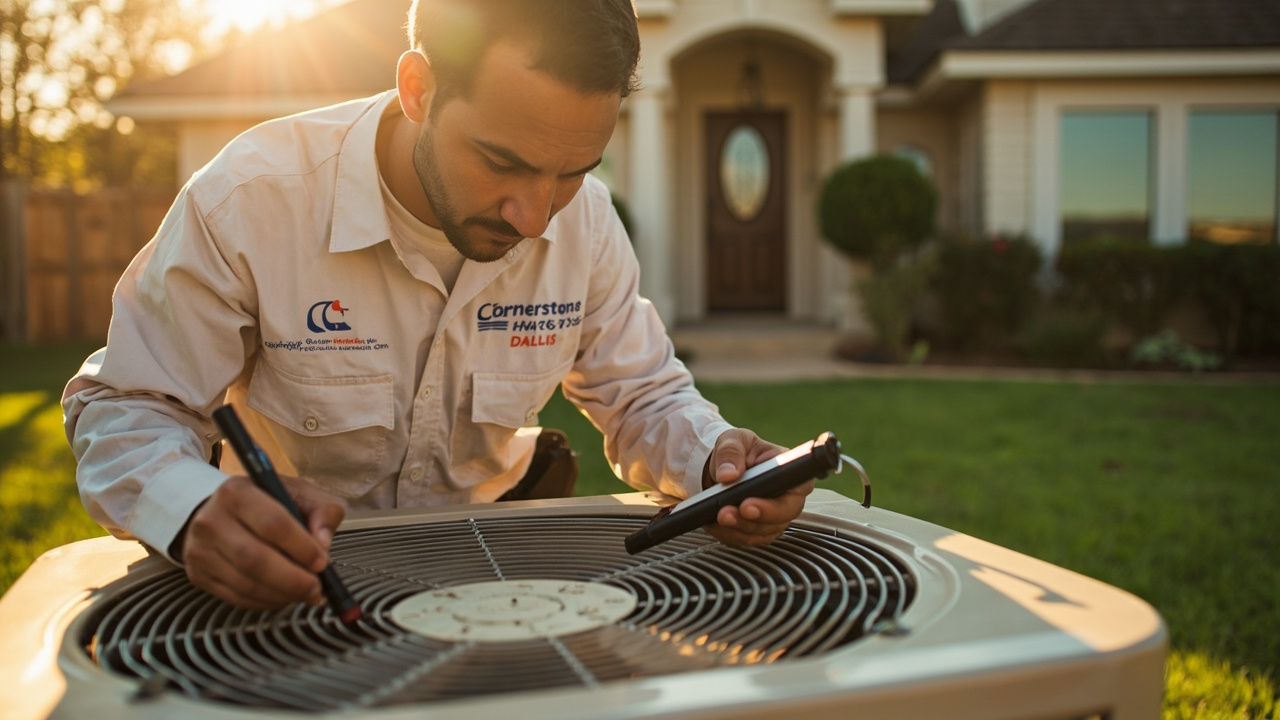
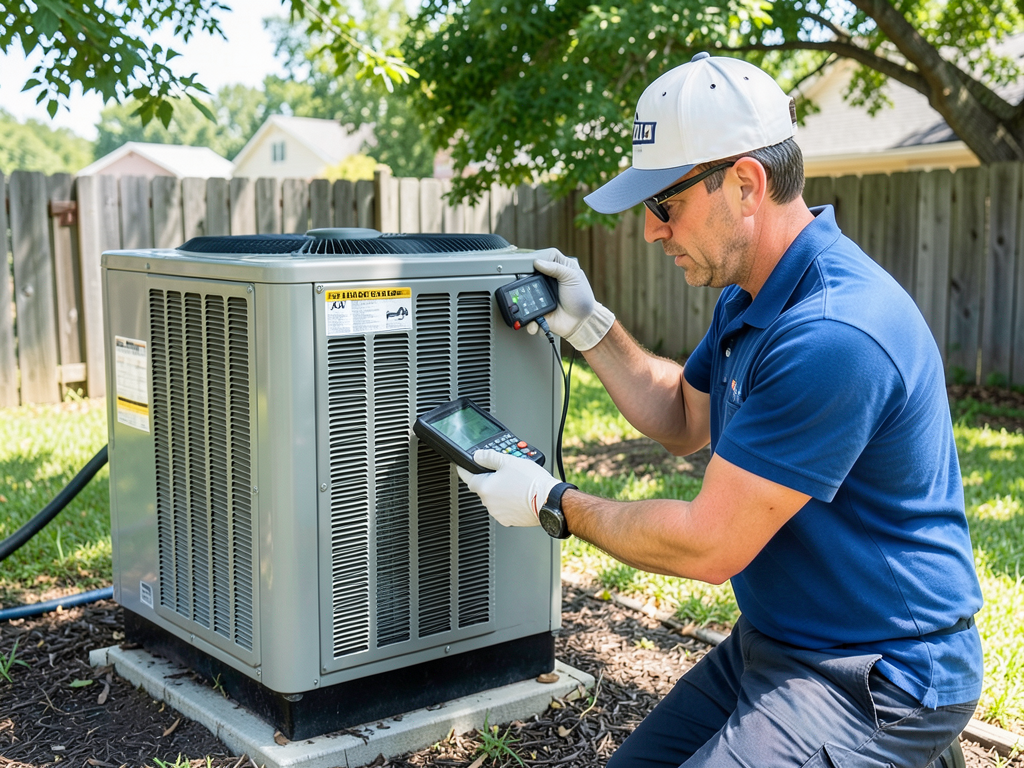
We start every outdoor fan failure with a voltage drop test at the motor terminals. This tells us whether the motor is receiving power. If voltage is present but the fan does not spin, the motor has failed. If voltage is absent, we trace the circuit back through the contactor, capacitor, and control board.

Capacitor testing comes next. We use a multimeter to measure microfarad capacity and compare it to the rated value stamped on the capacitor shell. A weak or dead capacitor cannot generate the phase shift needed to start a single-phase motor. We see this frequently in Dallas because extreme heat degrades the dielectric film inside the capacitor, causing it to lose charge over time.

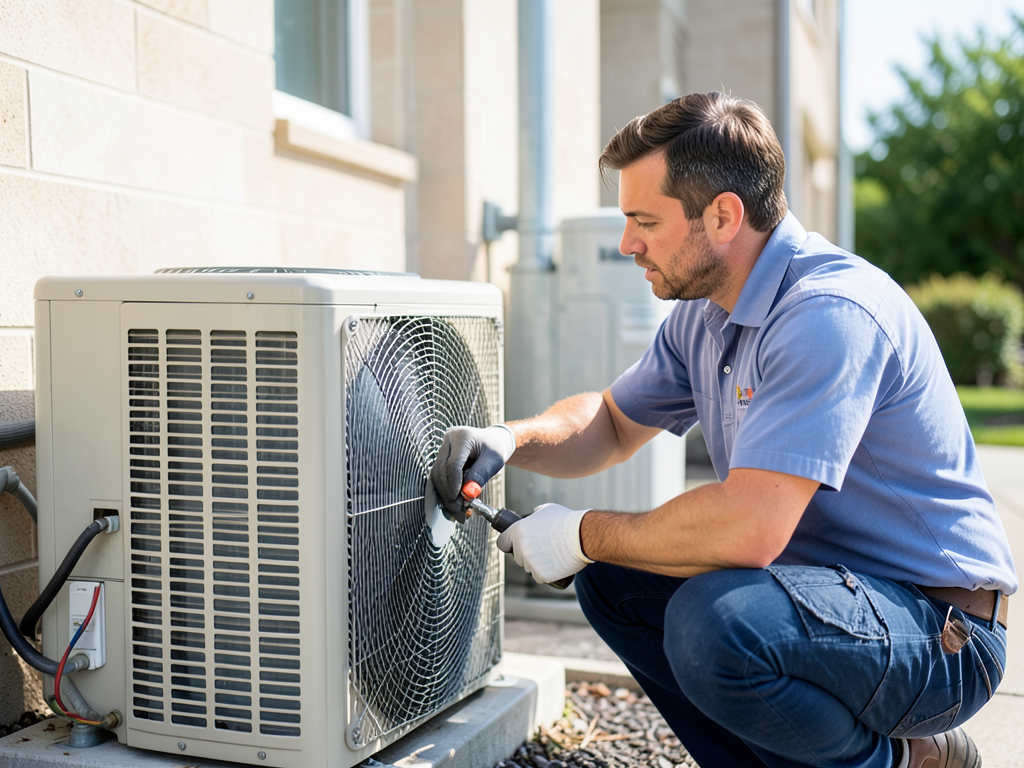
If the capacitor tests good and voltage reaches the motor, we check for mechanical seizure. We manually rotate the fan blades with power off. A seized motor will not turn. Bearing failure is common in outdoor motors because they run continuously in dusty, high-temperature conditions. Dallas wind also drives pollen and dirt into the motor housing, which accelerates wear.

We inspect the contactor for pitting or welding on the contact points. A pitted contactor may fail to close fully, which interrupts current flow to the fan motor. We also check the control board for error codes or failed relays that might prevent the fan from receiving a start signal.

Once we identify the failed component, we replace it with the correct OEM or quality aftermarket part. We verify proper voltage, amperage draw, and rotational speed before we close up the unit. We do not leave until the outdoor unit runs correctly and refrigerant pressures stabilize within normal range.

What Happens When You Call for a Non-Spinning Fan Repair

Outdoor Unit Not Spinning in Dallas – Expert Diagnosis and Repair for Every Cause
01

Initial System Assessment

We arrive with a full set of diagnostic tools and test the outdoor unit under live conditions. We measure voltage at the disconnect, check capacitor microfarads, and verify that the thermostat is calling for cooling. We also inspect for visible damage like frayed wires, burnt contactors, or debris in the fan assembly. This step identifies whether the problem is electrical, mechanical, or control-related.
02

Component Testing and Replacement

We isolate the failed part and install the replacement. If the motor is seized, we swap it with a direct-fit motor that matches the horsepower, voltage, and shaft configuration of the original. If the capacitor is weak, we install a new dual-run or single capacitor rated for your system. We torque all electrical connections to spec and secure the new component in the mounting bracket.
03

Performance Verification

We power up the system and monitor fan rotation, motor amperage, and refrigerant pressures. We verify that the fan reaches full speed within seconds of startup and that the compressor maintains safe operating pressures. We check for abnormal vibration or noise that might indicate a misaligned motor or damaged fan blade. We do not leave until the system cools correctly and all readings fall within manufacturer specifications.

Why Dallas Homeowners Trust Cornerstone HVAC Dallas for Fan Repairs

When your AC condenser fan not working, you need a company that stocks the parts and knows the systems common to Dallas homes. We work on Carrier, Trane, Lennox, Goodman, Rheem, and Bryant units daily. We keep dual-run capacitors, condenser fan motors, and contactors on every service truck.

Dallas homes built in the last two decades often use high-efficiency variable-speed systems. These units require specific motor modules and control boards that communicate with the thermostat over a data bus. A generic motor will not work. We carry the correct components and understand the wiring schematics for these advanced systems.

Older homes in East Dallas, Lakewood, and M Streets often have single-speed systems with straightforward PSC motors and mechanical contactors. These are simpler to diagnose but still require precise voltage and capacitance specs to run reliably in Texas heat.

We also understand the strain that Dallas weather places on outdoor units. The combination of high ambient temperatures, low humidity, and blowing dust creates a harsh operating environment. Capacitors degrade faster here than in cooler climates. Motors run hotter and bearings wear out sooner. We account for these factors when we recommend parts and maintenance intervals.

You will not get an upsell for a full system replacement unless your unit is genuinely beyond repair. If a new motor and capacitor restore function, that is what we install. If the compressor is failing and the system is 15 years old, we will tell you the truth about repair costs versus replacement value.

We also respond quickly. A non-spinning outdoor fan in July is not a problem you can wait three days to fix. We prioritize same-day service for cooling failures and keep evening and weekend slots open during peak season.

What You Can Expect When We Service Your Outdoor Unit

Same-Day Response for Cooling Failures

We know that a stopped condenser fan in Dallas summer heat is urgent. We prioritize same-day dispatch for calls received before early afternoon and offer next-morning service for later requests. Most fan motor and capacitor replacements take 60 to 90 minutes from diagnosis to final testing. We stock common parts on the truck so we do not need to schedule a return trip. If we need a specialty component, we source it from local suppliers and return within 24 hours.

Thorough Electrical and Mechanical Testing

We do not guess. We measure voltage, capacitance, amperage, and continuity at every failure point. We use calibrated multimeters and clamp ammeters to verify that each component meets spec. We also perform a visual inspection of the contactor, control board, and wiring harness to catch secondary problems before they cause another breakdown. If we find a weak capacitor or pitted contactor during a motor replacement, we inform you before we close the panel.

Restored Cooling with Verified Refrigerant Pressures

Once the fan spins correctly, we monitor suction and discharge pressures to confirm that the system is rejecting heat properly. A spinning fan with incorrect pressures indicates a refrigerant leak, a clogged filter drier, or a failing compressor. We check superheat and subcooling to verify proper refrigerant charge and ensure the system is cooling efficiently. You will feel cold air at the supply registers before we leave, and we confirm that the thermostat reaches setpoint within a reasonable time.

Parts Warranty and Preventive Guidance

Replacement motors and capacitors come with manufacturer parts warranties that typically cover defects for one year. We also provide guidance on preventing future fan failures, including annual maintenance to clean the condenser coil, check capacitor microfarads, and lubricate motor bearings if the motor uses oil ports. Regular maintenance extends motor life and reduces the chance of a mid-summer breakdown. We can enroll you in a maintenance plan that includes priority service and discounted repairs.

Frequently Asked Questions

You Have Questions,
We Have Answers

Why is my outside AC unit not spinning? +

Your outside AC unit may not spin due to a failed capacitor, burned-out motor, tripped breaker, or blown fuse. The capacitor stores energy to start the fan motor. When it fails, the motor cannot engage. Dallas heat stresses capacitors faster than cooler climates, shortening their lifespan. A tripped breaker often signals electrical overload or a short circuit. Debris blocking the fan blades or a seized motor bearing can also prevent spinning. Turn off your system immediately to avoid compressor damage. A licensed technician can diagnose the exact cause and restore cooling quickly.

Is the AC unit outside supposed to spin? +

Yes, the outdoor condenser fan should spin when your AC runs. This fan pulls air across the condenser coils to release heat absorbed from your home. You should hear the fan and feel airflow when standing near the unit. If the compressor runs but the fan does not spin, your system cannot reject heat properly. This causes the compressor to overheat and shut down on safety limits. In Dallas summers, a non-spinning fan leads to rapid system failure and uncomfortable indoor temperatures. Immediate repair prevents expensive compressor replacement.

How to fix AC unit outside fan not working? +

First, check your breaker panel for a tripped switch and reset if needed. Inspect the outdoor unit for debris blocking the fan blades. If the fan hums but does not turn, the capacitor has likely failed and needs replacement. A completely silent unit may indicate a bad contactor or motor. Never stick objects into the unit to manually spin the blade. Turn off power at the disconnect box before any inspection. Dallas homeowners should contact a qualified HVAC technician to safely diagnose and repair motor, capacitor, or electrical issues to restore function.

Why is my condenser fan humming but not spinning? +

A humming condenser fan that does not spin points to a failed start capacitor. The capacitor provides the electrical jolt needed to overcome inertia and start the motor spinning. When it weakens or fails, the motor receives power and hums but cannot turn the blades. Dallas heat accelerates capacitor degradation. A seized motor bearing can also cause humming without rotation. Continuing to run the system risks burning out the compressor. Shut down your AC and schedule immediate service. Capacitor replacement is straightforward and restores normal operation.

Should I turn off my AC if the fan isn't spinning? +

Yes, turn off your AC immediately if the outdoor fan is not spinning. Running the system without a functioning condenser fan traps heat inside the unit. This causes the compressor to overheat, triggering safety shutoffs or permanent damage. Compressor replacement costs thousands of dollars. The issue may be a simple capacitor failure, but continued operation escalates the problem. In Dallas heat, an overheated compressor fails fast. Shut down the system at the thermostat and the outdoor disconnect box. Call a technician to diagnose and repair before restarting.

What is the $5000 rule for AC? +

The $5000 rule helps decide between AC repair and replacement. If the repair cost multiplied by the age of your unit exceeds $5000, replacement makes better financial sense. For example, a $500 repair on a 12-year-old unit equals $6000, suggesting replacement. A $300 repair on a 5-year-old unit equals $1500, favoring repair. This guideline considers that older systems face more frequent breakdowns and lower efficiency. Dallas homeowners should also factor in rising energy bills and refrigerant phase-outs when making this decision.

What is the problem if the fan is not spinning? +

When the condenser fan does not spin, the problem lies in the electrical or mechanical systems. Common culprits include a failed capacitor, burned-out fan motor, broken contactor, or tripped breaker. The capacitor provides starting power for the motor. A faulty contactor prevents electricity from reaching the motor. Debris or a seized bearing can physically block rotation. In Dallas, extreme heat stresses electrical components and shortens their lifespan. Proper diagnosis requires testing voltage, capacitance, and motor windings. A qualified technician identifies the exact failure point and replaces defective parts.

Should I turn off my AC if the outside unit is not working? +

Yes, turn off your AC if the outside unit is not working. Running the indoor blower without the outdoor condenser creates an imbalance that can damage the compressor. The compressor continues attempting to pump refrigerant but cannot release heat without the condenser fan. This causes dangerous pressure buildup and overheating. In Dallas heat, compressor failure happens quickly under these conditions. Shut down the system at your thermostat and the outdoor disconnect switch. Schedule professional service immediately. Continuing operation transforms a simple repair into an expensive replacement.

Why is my AC fan running inside but not outside? +

The indoor fan runs on a separate blower motor controlled by your air handler. If the outside unit is silent, the issue involves the condenser components. A tripped breaker, failed contactor, bad capacitor, or burned-out condenser fan motor prevents outdoor operation. The thermostat signals both units to run, but only the indoor responds. Dallas electrical storms sometimes trip outdoor breakers without affecting indoor circuits. Check your breaker panel first. If breakers are fine, the outdoor unit needs professional diagnosis. Do not run the system long without outdoor operation.

How much does it cost to fix a AC fan not spinning? +

Repair costs depend on the failed component. Capacitor replacement ranges from affordable to moderate, while a new condenser fan motor costs more. If the compressor failed due to prolonged operation without a fan, replacement costs jump significantly. Labor, refrigerant recovery, and parts drive final pricing. Dallas service rates reflect local demand and summer workload. Request a detailed diagnostic before approving work. Many companies offer financing for larger repairs. Preventative maintenance catches capacitor wear before failure, avoiding emergency pricing and compressor damage. Always get multiple quotes for expensive repairs.

How Dallas Heat and Dust Accelerate Condenser Fan Failures

Dallas summers combine extreme heat with airborne dust from construction, agriculture, and dry North Texas soil. This mix infiltrates outdoor AC units and coats the condenser coil, fan blades, and motor housing. The dust acts as an insulator, trapping heat inside the motor and accelerating winding degradation. At the same time, high ambient temperatures push motors closer to their thermal limits. A motor rated for 60 degrees Celsius can overheat when it runs continuously in 105-degree air with a dust-clogged housing. This is why capacitor and motor failures spike in Dallas during July and August.

Cornerstone HVAC Dallas works exclusively in the Dallas metro, which means we understand the wear patterns specific to this climate. We know that capacitors fail faster here than in milder regions. We know that outdoor motors need more frequent inspection because of dust buildup. We also know the vintage and brand distribution of units across neighborhoods like Uptown, Lake Highlands, and North Oak Cliff. This local knowledge translates to faster diagnosis, correct parts on the first visit, and repair strategies that account for the environmental stress your system faces year after year.
HVAC Services in The Dallas Area

Looking for expert HVAC services near you? Cornerstone HVAC Dallas proudly serves homeowners and businesses throughout the greater Dallas area with professional heating and cooling repairs, system installations, indoor air quality solutions, and emergency HVAC services. From Plano to Arlington, our certified technicians are ready to deliver fast, efficient service wherever you are. Use the map below to explore our coverage areas and discover trusted HVAC support right around the corner.

Address:
Cornerstone HVAC Dallas, 5956 Sherry Ln, Suite 2000, Dallas, TX, 75225

Additional Services We Offer

Our news updates

Latest Articles & News from The Blogs

How to Solve C-Wire Issues When Upgrading Your Thermostat in Highland Village Upgrading to a smart thermostat in Highland Village…

How to Solve C-Wire Issues When Upgrading Your Thermostat in Highland Village

How to Solve C-Wire Issues When Upgrading Your Thermostat in Highland Village Upgrading to a smart thermostat in Highland Village…

A Simple Guide to SEER2 Ratings for Homeowners in Little Elm

A Simple Guide to SEER2 Ratings for Homeowners in Little Elm If you’re shopping for a new air conditioner in…

Choosing the Right Climate Control for Your Westlake Pool House or Luxury Cabana

Choosing the Right Climate Control for Your Westlake Pool House or Luxury Cabana Living in Westlake means dealing with Texas…

Contact Us

Your outdoor unit will not fix itself. Call Cornerstone HVAC Dallas at (972) 850-2750 for same-day diagnosis and repair. We will restore your cooling and get your system running safely before the heat builds inside your home.