






menu

AC Blowing Warm Air in Dallas – Expert Diagnosis in Under 90 Minutes

When your air conditioner blows hot air instead of cooling your home, you need fast answers. Our technicians diagnose the exact cause of warm air from your AC vents and restore cold air fast.

Slider Image 1
Slider Image 2
Slider Image 3
Slider Image 4
Slider Image 5
Slider Image 7
Slider Image 8
Slider Image 9
Slider Image 10
Slider Image 11

Why Your Air Conditioner Is Blowing Hot Air in Dallas

You set the thermostat to 72 degrees. Your system is running. But your AC vents are blowing hot air instead of cold. This is not a thermostat issue. This is a system failure that demands immediate attention.

Dallas summers push air conditioning systems harder than almost anywhere else in Texas. When temperatures hit 105 degrees for weeks straight, even minor refrigerant leaks or compressor failures turn your central air into an expensive furnace. Your air conditioning running but not cooling is a symptom of one of five critical failures.

The most common cause is refrigerant loss. Your system does not consume refrigerant. If levels drop, you have a leak. Low refrigerant means your evaporator coil cannot absorb heat, so your air conditioner blows warm air through the vents instead of cold. The second culprit is a failed compressor. The compressor pressurizes refrigerant and drives the cooling cycle. When it fails, your AC runs but produces zero cooling.

Dirty condenser coils are the third reason your central air blows warm air. Dallas air carries dust, pollen, and cottonwood debris that cakes onto outdoor units. Blocked coils cannot release heat, so the refrigerant stays hot and your vents blow warm air. Electrical failures and frozen evaporator coils round out the top five.

You cannot fix refrigerant leaks with a recharge. You cannot clean condenser coils with a garden hose. You need a technician who understands how North Texas heat accelerates wear on compressors and expansion valves.

Why Your Air Conditioner Is Blowing Hot Air in Dallas
How We Fix Air Conditioners Blowing Hot Air

How We Fix Air Conditioners Blowing Hot Air

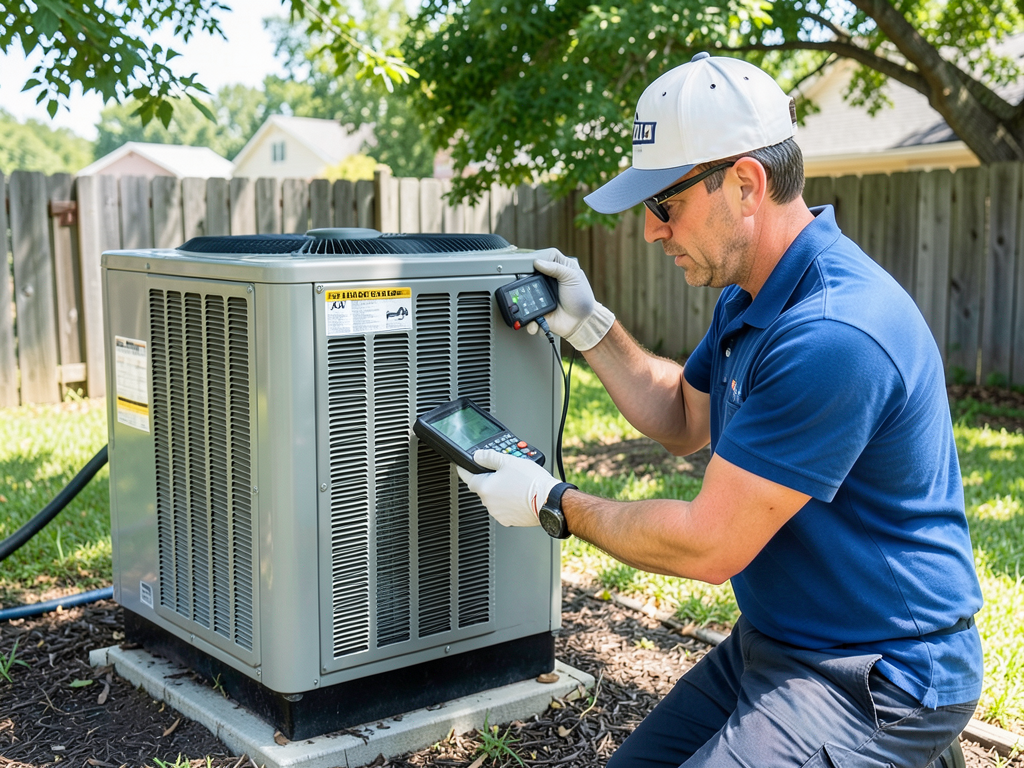
We do not guess. We test refrigerant pressures at the suction line and liquid line to confirm charge levels. We measure superheat and subcooling to verify your system is cycling correctly. If your air conditioner is blowing hot air, these two metrics tell us whether the problem is refrigerant loss, airflow restriction, or compressor failure.

We use a digital manifold gauge set to track live pressures while the system runs. Low suction pressure combined with high superheat confirms a refrigerant leak. High suction pressure with low subcooling points to a restriction in the metering device or a clogged filter drier. We do not add refrigerant until we locate and repair the leak. Adding refrigerant to a leaking system wastes money and violates EPA regulations.

If the compressor is running but discharge pressure stays flat, the compressor has failed internally. Valves inside the compressor move refrigerant from low pressure to high pressure. When those valves break, the compressor runs but does not pump. You hear the unit running outside, but your AC vents blow hot air because refrigerant is not circulating.

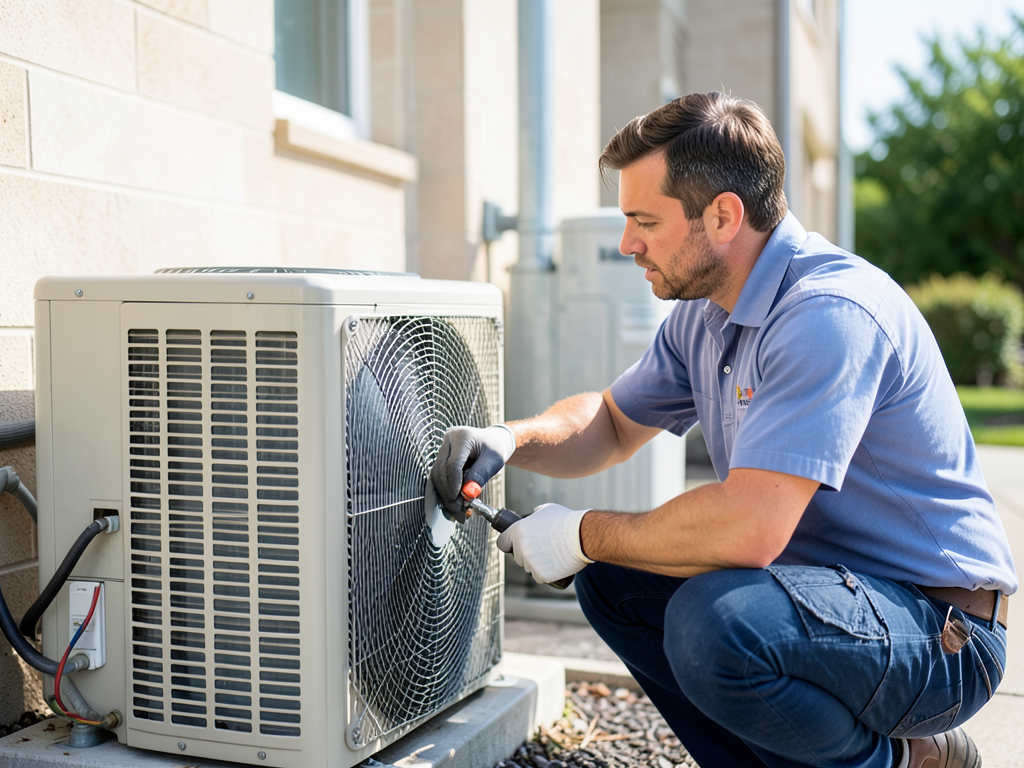
Dirty condenser coils get cleaned with a coil-specific detergent and low-pressure rinse. High-pressure washing bends the aluminum fins and reduces airflow. We straighten bent fins with a fin comb to restore surface area for heat exchange.

Frozen evaporator coils mean airflow has dropped below 400 cubic feet per minute per ton of cooling. We check the blower motor capacitor, verify static pressure across the coil, and confirm the air filter is clean. Low airflow causes the coil temperature to drop below freezing, which blocks airflow entirely and stops cooling.

What Happens When You Call for Warm Air Diagnosis

AC Blowing Warm Air in Dallas – Expert Diagnosis in Under 90 Minutes
01

Initial System Assessment

We start by confirming airflow at the vents and checking thermostat settings. Then we move to the outdoor unit to listen for compressor engagement and measure amp draw on the compressor and condenser fan motor. High amp draw signals a failing compressor. Low amp draw suggests electrical failure. We confirm the system is getting power and the contactors are closing before moving to refrigerant diagnostics.
02

Refrigerant and Airflow Testing

We attach gauges to the service ports and record suction pressure, discharge pressure, and line temperatures. These numbers tell us if refrigerant is low, overcharged, or blocked. We measure temperature split at the supply plenum and return air to confirm the evaporator coil is absorbing heat. If the split is less than 15 degrees, the coil is not cooling. We check static pressure to verify the blower is moving enough air.
03

Repair and Verification

Once we identify the failure, we complete the repair and retest the system under load. We verify refrigerant pressures stabilize in the correct range, confirm the temperature split reaches 18 to 22 degrees, and check that your AC vents blow cold air at the target temperature. We document the repair with before and after pressures so you know exactly what was fixed and why your air conditioning is now blowing cold air.

Why Dallas Homeowners Trust Cornerstone HVAC for AC Repairs

Dallas heat does not forgive poor workmanship. When your central air blows warm air in July, you need a technician who understands how thermal expansion valves fail under sustained high head pressure. You need someone who knows that refrigerant leaks in Dallas units often start at the flare fittings on the outdoor coil because daily temperature swings cause brass to expand and contract.

We have diagnosed air conditioning systems in Preston Hollow, Lake Highlands, and Oak Cliff for years. We know that homes built in the 1980s often have undersized ductwork that restricts airflow and causes coils to freeze. We know that spray foam insulation in newer builds sometimes blocks return air pathways and starves the blower. These are local problems that require local experience.

When your air conditioner is running but not cooling, generic troubleshooting wastes time. We go straight to the most common failure points for your system type and age. We carry the parts that fail most often in North Texas summer heat, including compressor start capacitors, dual-run capacitors, and condenser fan motors. This means we complete most repairs in one visit.

We do not sell you a new system when a $200 repair will restore cold air. We do not add refrigerant without finding the leak. We follow EPA Section 608 guidelines for refrigerant recovery and recharging. You get honest diagnosis, correct repairs, and air conditioning that blows cold air when we leave.

Cornerstone HVAC Dallas has built a reputation on solving the problems other companies misdiagnose. When your AC vents blow hot air, you need precision, not guesswork.

What to Expect When Your AC Blows Warm Air

Response Time and Availability

We dispatch a technician within 90 minutes for warm air emergencies. Dallas heat turns a non-cooling air conditioner into a safety issue fast, especially for elderly residents and young children. We prioritize calls where the air conditioner is blowing hot air because we know how quickly indoor temperatures climb when outdoor temps hit triple digits. Most diagnosis visits take 45 to 90 minutes depending on system complexity. We arrive with the diagnostic tools and common replacement parts needed to restore cooling the same day.

Diagnostic Process and Transparency

You will see the pressure readings, temperature measurements, and amp draws that led to our diagnosis. We explain what failed, why it failed, and what happens if you delay the repair. If your air conditioning is not blowing cold air because of a refrigerant leak, we show you the leak using soap bubbles or electronic leak detection. If the compressor failed, we show you the flat discharge pressure. You get photos of damaged components and a written estimate before we start any repair work.

Repair Quality and Testing

We repair refrigerant leaks with brazed joints, not quick-connect fittings. We pull a vacuum on the system for 30 minutes and verify it holds before adding refrigerant. We charge the system to manufacturer specifications using superheat or subcooling method depending on metering device type. After the repair, we measure supply air temperature, verify the system cycles correctly, and confirm your vents are blowing cold air at the correct volume. You feel the difference before we leave.

Follow-Up and Maintenance Plans

Repairs come with a written record of all work completed, parts replaced, and refrigerant added. We provide maintenance recommendations specific to your system and your home. If your condenser coils were caked with debris, we recommend seasonal cleanings to prevent future failures. If low airflow caused your evaporator to freeze, we recommend filter changes every 30 days during summer. Preventing your air conditioner from blowing hot air is cheaper than emergency repairs in July.

Frequently Asked Questions

You Have Questions,
We Have Answers

Why is my AC just blowing warm air? +

Your AC blows warm air when something disrupts the refrigeration cycle. The most common culprits are a dirty air filter choking airflow, low refrigerant from a leak, or a failed compressor. In Dallas, the extreme summer heat stresses systems hard, which accelerates wear on compressors and coils. A frozen evaporator coil also blocks cooling. This happens when airflow drops or refrigerant runs low. Your thermostat setting matters too. If someone switched it to heat mode or the wiring failed, warm air flows freely. Turn off your system and call a licensed technician to diagnose the root cause before damage spreads.

How to reset AC not blowing cold air? +

Find your thermostat and switch it to Off. Wait five minutes. This lets refrigerant pressures equalize inside the system. Next, go to your electrical panel and flip the breaker labeled AC or HVAC to Off. Wait another five minutes. Flip the breaker back to On, then return to your thermostat and set it to Cool. Drop the temperature setting below your current room temp. The system should kick on within a few minutes. If warm air still flows, the problem runs deeper than a simple reset. A failed capacitor, compressor, or refrigerant leak needs professional repair in Dallas.

How do I know if my AC is low on freon? +

Low refrigerant shows specific symptoms. Your AC runs constantly but never cools your Dallas home below 78 degrees. Ice forms on the copper refrigerant lines or evaporator coil inside the air handler. You hear a hissing or bubbling sound near the outdoor unit, which signals an active leak. Your energy bills climb because the system works harder to push warm air. Refrigerant does not deplete like gas in a car. If levels drop, you have a leak somewhere in the system. A technician uses gauges to measure pressure and pinpoint the leak before adding refrigerant.

Why is my AC blowing but not cooling? +

Your AC blows air but delivers zero cooling when the compressor fails, refrigerant leaks out, or the evaporator coil freezes solid. In Dallas, dust and pollen clog filters fast during spring and summer, which chokes airflow and freezes coils. A tripped breaker to the outdoor condenser unit also stops cooling while the indoor blower keeps running. Check your outdoor unit. If the fan spins but the compressor stays silent, the compressor likely failed. If the unit does not run at all, check your breaker. Anything beyond filter replacement demands a licensed technician to avoid costly mistakes.

Should I turn off the AC if it blows hot air? +

Yes, turn it off immediately. Running your AC while it blows hot air can destroy the compressor, which costs thousands to replace in Dallas. If low refrigerant caused the problem, the compressor runs without lubrication and overheats. A frozen coil drips water everywhere, which damages ceilings and floors. Electrical issues can worsen and trip breakers repeatedly. Switch your thermostat to Off and call a technician the same day. If your Dallas home becomes unbearable, use fans or relocate to a cooler room. Do not restart the system until a professional identifies and fixes the root problem.

What are signs of a failing AC compressor? +

A failing compressor makes loud grinding, clanking, or squealing noises from the outdoor unit. It struggles to start, causing lights to flicker when it kicks on. Your AC runs constantly but barely cools your Dallas home. The compressor is hot to the touch, even hotter than normal summer operation. You smell burning oil or see scorch marks near electrical connections. Circuit breakers trip repeatedly because the compressor draws excessive current. Compressors fail from age, lack of maintenance, or running with low refrigerant. Replacement costs between $1,500 and $3,000 depending on your system size and refrigerant type.

Can I fix warm AC myself? +

You can replace a dirty air filter and clear debris from around your outdoor condenser unit. Those tasks take minutes and require zero tools. Beyond that, stop. Refrigerant handling requires EPA certification because improper venting harms the environment and breaks federal law. Electrical repairs risk shock or fire if you lack training. Misdiagnosing the problem wastes money on unnecessary parts. Dallas summers do not forgive mistakes. A botched DIY repair can destroy your compressor or void your warranty. Call a licensed HVAC technician to diagnose and fix the issue correctly the first time. Save yourself the risk and expense.

What is the $5000 rule for AC? +

The $5,000 rule is a decision framework for replacing versus repairing an aging AC system. Multiply the repair cost by your system's age in years. If the result exceeds $5,000, replace the entire system instead of repairing it. For example, a $1,200 compressor repair on a 5-year-old unit equals $6,000, which suggests replacement makes more financial sense. This rule accounts for diminishing efficiency and future repair costs. In Dallas, older systems struggle with extreme heat and humidity, which drives up energy bills. A new system offers better efficiency, lower bills, and a full warranty for peace of mind.

How to manually reset an AC? +

Locate your outdoor condenser unit in your Dallas yard or side of the house. Find the electrical disconnect box mounted near the unit. Open it and flip the switch to Off or pull the fuse block straight out. Wait five full minutes. This clears the system's memory and lets refrigerant pressures balance. Reinstall the fuse block or flip the switch back to On. Go inside and turn your thermostat to Off. Wait two minutes, then set it to Cool and drop the temperature setting. Your AC should start within three minutes. If it does not, the problem requires professional diagnosis.

What is the 3 minute rule for AC? +

The 3-minute rule protects your compressor from short cycling damage. After your AC shuts off, you must wait at least three minutes before restarting it. This delay lets refrigerant pressures equalize between the high and low sides of the system. If you restart too soon, the compressor tries to start against high pressure, which strains the motor and can blow the capacitor. Most modern thermostats enforce this delay automatically using a built-in timer. If your Dallas AC short cycles frequently, starting and stopping every few minutes, you have a deeper problem like a failing compressor, bad thermostat, or refrigerant issue.

How Dallas Heat Accelerates AC Failures and Refrigerant Loss

Dallas summers create sustained high head pressure in air conditioning systems. When outdoor temperatures stay above 100 degrees for days, discharge pressures spike and stress compressor valves, expansion valves, and refrigerant lines. This constant thermal stress causes fittings to loosen and brazed joints to crack. Your air conditioner blowing hot air in Dallas is often the result of a slow refrigerant leak that started as a microscopic crack in a stressed joint. High head pressure also forces compressors to work harder, which shortens their lifespan and increases the chance of internal valve failure.

Choosing a local HVAC company means working with technicians who understand how North Texas conditions affect system performance. We know that homes near White Rock Lake deal with higher humidity that affects dehumidification loads. We know that neighborhoods with mature trees see more condenser coil blockages from cottonwood and oak debris. Cornerstone HVAC Dallas has diagnosed thousands of air conditioners running but not cooling in this climate. When your central air blows warm air, you need someone who knows what fails first in Dallas heat, not a generic diagnostic checklist.
HVAC Services in The Dallas Area

Looking for expert HVAC services near you? Cornerstone HVAC Dallas proudly serves homeowners and businesses throughout the greater Dallas area with professional heating and cooling repairs, system installations, indoor air quality solutions, and emergency HVAC services. From Plano to Arlington, our certified technicians are ready to deliver fast, efficient service wherever you are. Use the map below to explore our coverage areas and discover trusted HVAC support right around the corner.

Address:
Cornerstone HVAC Dallas, 5956 Sherry Ln, Suite 2000, Dallas, TX, 75225

Additional Services We Offer

Our news updates

Latest Articles & News from The Blogs

How to Solve C-Wire Issues When Upgrading Your Thermostat in Highland Village Upgrading to a smart thermostat in Highland Village…

How to Solve C-Wire Issues When Upgrading Your Thermostat in Highland Village

How to Solve C-Wire Issues When Upgrading Your Thermostat in Highland Village Upgrading to a smart thermostat in Highland Village…

A Simple Guide to SEER2 Ratings for Homeowners in Little Elm

A Simple Guide to SEER2 Ratings for Homeowners in Little Elm If you’re shopping for a new air conditioner in…

Choosing the Right Climate Control for Your Westlake Pool House or Luxury Cabana

Choosing the Right Climate Control for Your Westlake Pool House or Luxury Cabana Living in Westlake means dealing with Texas…

Contact Us

Your air conditioner blowing hot air will not fix itself. Call Cornerstone HVAC Dallas at (972) 850-2750 right now. We will diagnose the problem and restore cold air fast.