




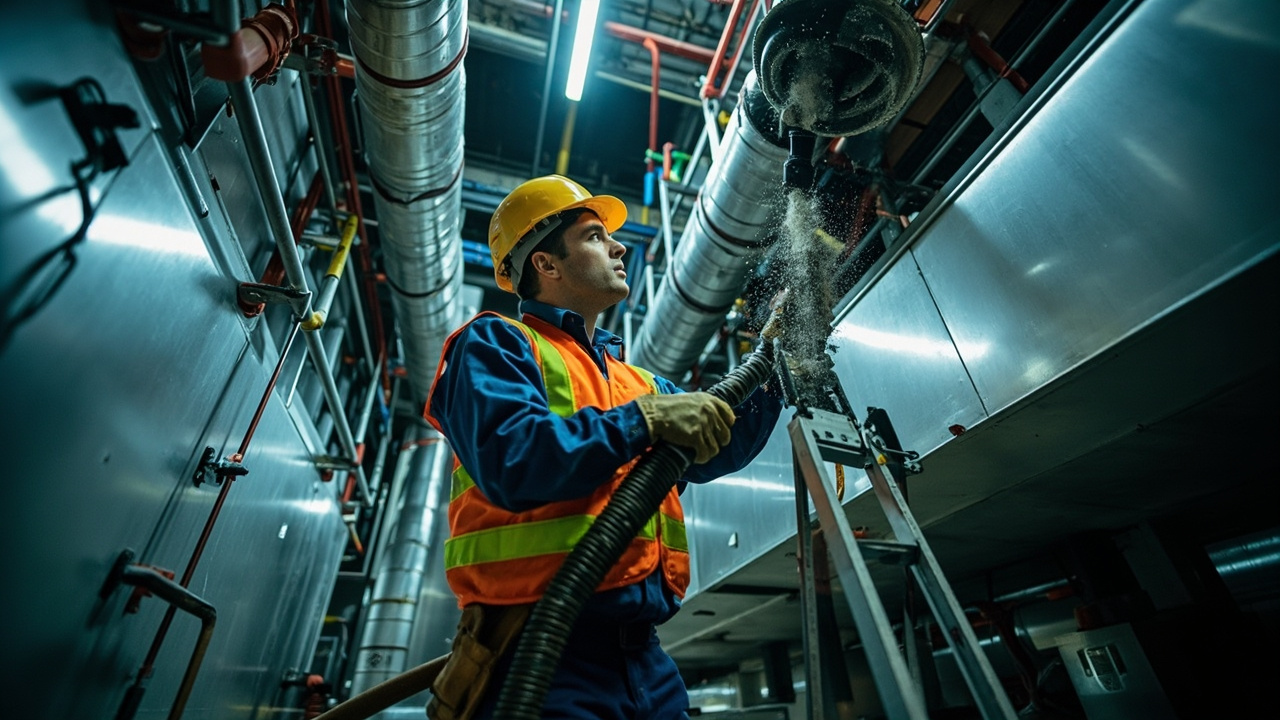


Dallas's construction boom creates constant airborne particulates. When cranes operate near your facility or new developments rise in adjacent lots, construction dust infiltrates outdoor air intakes and settles throughout ductwork. The city's position in the Texas Blackland Prairie means clay-based soils that generate fine dust during dry periods. Summer heat drives ozone formation, making outdoor air quality worse during peak business hours. These factors accelerate contamination in commercial HVAC systems faster than in less urbanized areas. Industrial facilities near shipping corridors absorb diesel particulates from heavy truck traffic. Buildings in older districts like Oak Cliff or East Dallas often have aging ductwork with decades of accumulated contamination that standard filter changes cannot address.
Dallas facility managers work within specific local code requirements for commercial ventilation. The city requires mechanical permits for major HVAC modifications and expects documentation of system maintenance for commercial occupancy permits. When indoor air quality complaints arise, property owners need evidence of proactive maintenance. Professional commercial HVAC duct cleaning creates that documentation trail. Local insurance carriers increasingly request maintenance records when underwriting commercial property policies. Cornerstone HVAC Dallas understands these local requirements because we work within Dallas's regulatory environment daily. Our documentation meets city inspection standards and provides the records facility managers need for compliance verification and liability protection.