




menu

Storm Damage HVAC Repair in Dallas – Emergency Response Within 60 Minutes

When severe weather destroys your heating or cooling system, you need immediate storm damage HVAC repair from technicians who understand Dallas's extreme weather patterns and can restore comfort fast.

Slider Image 1
Slider Image 2
Slider Image 3
Slider Image 4
Slider Image 5
Slider Image 7
Slider Image 8
Slider Image 9
Slider Image 10
Slider Image 11

Dallas Storm Damage Destroys HVAC Systems in Minutes

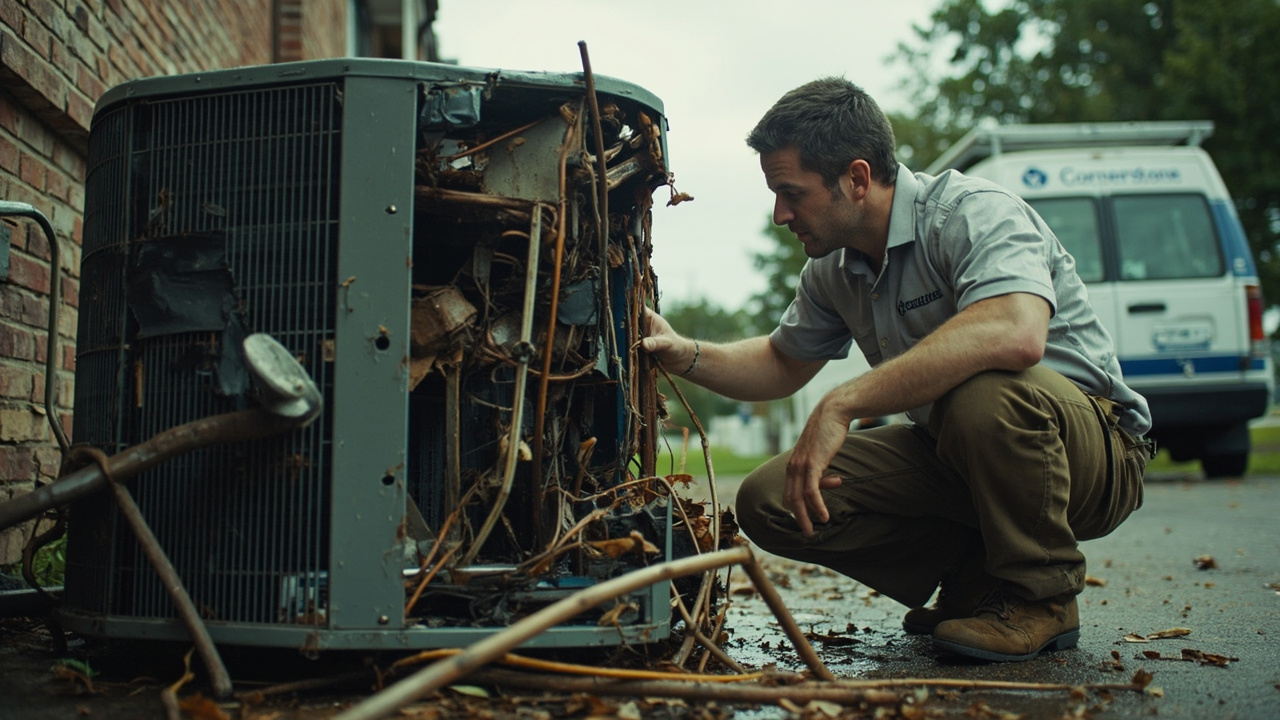
Dallas sits in the heart of Tornado Alley, where spring thunderstorms bring golf ball-sized hail, straight-line winds exceeding 70 mph, and sudden temperature swings that wreak havoc on outdoor HVAC equipment. When a storm rips through neighborhoods like Lake Highlands or Oak Cliff, your air conditioner's compressor housing cracks under hail impact, refrigerant lines bend and leak, and debris punctures condenser coils.

The damage happens fast. Hail dents thin aluminum fins on your condenser unit, reducing airflow and forcing your system to work harder. Wind-blown tree limbs snap electrical disconnect boxes and crush refrigerant lines. Heavy rain floods ground-level air handlers in older homes near White Rock Creek. Within hours of a storm passing, you face a dead AC unit in 95-degree heat or a furnace that won't fire when temperatures drop overnight.

Dallas's clay soil compounds the problem. When saturated ground shifts after heavy rain, concrete pads crack and tilt, stressing refrigerant connections and electrical conduits. Emergency HVAC storm repair becomes critical when your family's comfort and safety depend on immediate heating and cooling system restoration.

You need technicians who respond now, not next week. Storm damaged AC unit repair requires diagnostic expertise to separate cosmetic dents from catastrophic compressor failure. The difference between a quick fix and a full system replacement often comes down to how fast a qualified technician assesses the damage and prevents secondary failures.

Dallas Storm Damage Destroys HVAC Systems in Minutes
How We Restore Storm-Damaged HVAC Systems

How We Restore Storm-Damaged HVAC Systems

HVAC storm restoration services start with electrical safety verification. Before touching your damaged unit, we kill power at the breaker and check for exposed wiring, damaged disconnect switches, and compromised control boards. Storm surges from lightning strikes fry capacitors and contactors instantly, and energized damaged equipment kills technicians.

We perform refrigerant leak detection using electronic sensors and nitrogen pressure tests. A bent suction line or punctured evaporator coil bleeds refrigerant into the atmosphere and leaves your compressor running dry, which destroys the motor within hours. We isolate leaks, recover remaining refrigerant properly, and determine whether brazing repairs will hold or if component replacement is necessary.

Compressor assessment separates repairable damage from total loss. We measure electrical draw, check oil quality for moisture contamination, and test compression ratios. A compressor that survives the initial impact often fails weeks later from internal damage you cannot see. We document everything for your insurance claim.

Heating and cooling storm damage repair includes ductwork inspection. When your outdoor unit shifts or a tree falls on your roof, supply and return ducts separate at joints, allowing conditioned air to pour into your attic. We pressure-test duct systems and seal breaches that waste energy and create humidity problems.

We replace damaged components with exact OEM specifications. A storm-damaged condenser fan motor gets replaced with the correct horsepower and rotation speed, not whatever fits the mounting bracket. Control boards get programmed to match your system's tonnage and refrigerant type. We fix storm damaged HVAC systems correctly the first time because shortcuts create callbacks and secondary failures.

What Happens When You Call for Emergency Storm Repair

Storm Damage HVAC Repair in Dallas – Emergency Response Within 60 Minutes
01

Immediate Dispatch and Assessment

You call our emergency line and speak with a live dispatcher who logs your location and damage type. We send a fully equipped service truck within 60 minutes. The technician arrives with testing equipment, replacement capacitors, contactors, and refrigerant to handle most repairs on the first visit. You get a verbal damage assessment and repair options before any work starts.
02

Detailed System Diagnostics

We document all visible damage with photos for insurance claims. Electrical circuits get tested for shorts and opens. Refrigerant pressures confirm compressor function and leak locations. Blower motors are checked for bearing damage from water intrusion. Control boards are tested for surge damage. You receive a written diagnostic report itemizing every damaged component with repair costs before we proceed.
03

Repair and Verification Testing

We complete approved repairs and run full system performance tests. Refrigerant charge gets measured precisely by superheat and subcooling. Airflow is verified at supply registers. Electrical draw confirms proper compressor and fan motor operation. We cycle your system multiple times to confirm stable operation under load. You receive documentation showing your HVAC system meets manufacturer specifications and delivers rated capacity.

Why Dallas Homeowners Choose Cornerstone HVAC Dallas for Storm Repairs

Dallas experiences an average of 37 thunderstorm days annually, with peak storm activity from April through June when temperature differentials create atmospheric instability. We operate 365 days a year because storm damage does not wait for business hours. When a supercell drops hail across Lakewood or Preston Hollow, our phones light up with panicked homeowners facing dead AC units in oppressive heat.

We maintain relationships with every major insurance carrier operating in Dallas County. Our technicians document damage using the same terminology and standards that adjusters expect, which speeds your claim approval. We photograph serial numbers, model numbers, and specific damaged components. We write estimates that separate storm damage from pre-existing wear, which protects you from claim denials based on maintenance issues.

Our technicians carry Texas Department of Licensing and Regulation HVAC licenses and EPA Section 608 certification for refrigerant handling. This matters because improper refrigerant recovery during storm repairs violates federal law and creates environmental liability you do not want. We follow ACCA Manual S sizing protocols when storm damage requires full system replacement, ensuring your new equipment matches your home's actual cooling load rather than perpetuating decades-old oversizing mistakes.

We stock parts for Trane, Carrier, Lennox, and Rheem systems in our service vehicles because waiting three days for a capacitor during a heat wave is unacceptable. When your 15-year-old condenser takes a direct hail strike and replacement makes more financial sense than repair, we provide written quotes comparing efficiency ratings and operating costs so you make informed decisions under pressure.

Dallas's building codes require specific installation standards for wind resistance and electrical grounding. We mount replacement condensers on reinforced pads with anchor straps rated for 110 mph winds. Electrical disconnects get weatherproof enclosures that meet NEC Article 440 requirements for outdoor HVAC equipment.

What to Expect During Emergency Storm Damage Repair

Response Time and Availability

We dispatch emergency storm repair crews 24 hours a day, seven days a week. During major weather events affecting multiple Dallas neighborhoods, we prioritize calls based on safety hazards like exposed electrical wiring and medical necessity for elderly residents. You receive a call-back within 15 minutes confirming your place in the dispatch queue and estimated arrival time. Our average response during storm emergencies is 90 minutes from initial call to technician arrival. We stay until your system is operational or until we secure the equipment to prevent further damage if parts are required.

Damage Assessment and Insurance Documentation

Our technicians photograph damage from multiple angles showing manufacturer labels, model numbers, and serial numbers clearly visible for adjuster review. We measure hail dents, document bent refrigerant lines, and note electrical component failures. You receive a written diagnostic report separating storm damage from normal wear within two hours of our arrival. We include equipment age, maintenance history observations, and repair versus replacement recommendations with cost justifications. This documentation format matches what insurance adjusters expect, which reduces claim disputes and speeds settlement.

Repair Quality and Testing Standards

Every storm damage repair includes pressure testing to confirm refrigerant circuit integrity before recharging systems. We measure superheat and subcooling to verify proper refrigerant charge rather than using flawed rule-of-thumb methods that leave systems undercharged. Electrical repairs get torqued to manufacturer specifications and protected with weatherproof enclosures. We run systems through complete cooling and heating cycles, measuring supply air temperature, amp draw, and capacitor microfarad ratings. You receive written documentation showing your system meets factory performance specifications before we leave your property.

Post-Repair Monitoring and Support

Storm-damaged systems sometimes develop secondary failures days after initial repairs when hidden damage surfaces under operating stress. We follow up with phone calls 48 hours after emergency repairs to confirm stable operation. If new issues appear within 30 days related to the storm event, we return for diagnostic assessment at no additional service call charge. This matters because compressors weakened by refrigerant starvation or electrical surges often fail after running briefly. We document all follow-up findings separately to support supplemental insurance claims if needed.

Frequently Asked Questions

You Have Questions,
We Have Answers

What is the $5000 rule for HVAC? +

The $5000 rule is a quick decision guide for aging HVAC systems. Multiply your unit's age by the estimated repair cost. If the total exceeds $5000, replacement makes more sense than repair. For example, a 12-year-old system needing $500 in repairs equals $6000, so you should replace it. After storm damage in Dallas, this rule helps you decide fast. Hail-damaged compressors or flooded blower motors on older units rarely justify expensive fixes. Get a professional inspection within 24 hours of storm damage to assess whether repair or replacement protects your investment and gets your cooling back online quickly.

Does insurance cover HVAC damage? +

Most homeowners policies cover sudden, accidental HVAC damage from storms, including hail impact, wind-blown debris, and tree strikes. If a tornado rips your condenser apart or hail punctures your coils, you're covered. Water damage gets tricky. Flash flooding is usually excluded unless you carry separate flood insurance. However, roof damage that lets rain into your attic air handler may be covered. Document everything immediately with photos. Dallas storms move fast, so call your insurance adjuster and an HVAC tech the same day. Many local companies help with claims paperwork and can work directly with adjusters.

How to fix a HVAC unit that was flooded? +

Do not turn on a flooded HVAC unit. Power must stay off until a licensed technician inspects it. Floodwater carries contaminants and shorts electrical components. In Dallas, flash floods from severe thunderstorms can submerge ground-level units in minutes. First, document damage with photos for insurance. Remove standing water around the unit. A qualified technician will drain the system, clean components, test electrical circuits, and replace damaged parts like the blower motor or control board. Refrigerant lines need pressure testing. Ductwork may need sanitizing if water entered. Never assume a dried-out unit is safe to restart.

How much is emergency HVAC repair? +

Emergency HVAC repair costs vary based on damage severity and time of service. After-hours calls during Dallas summer storms typically include trip fees and premium labor rates. Minor fixes like replacing a contactor or capacitor damaged by lightning may run lower, while compressor replacement or extensive electrical repairs cost more. Storm damage complicates pricing because multiple components often fail together. Many Dallas companies offer free storm damage assessments and work with insurance to minimize your out-of-pocket expense. Get written estimates before authorizing work. Priority is restoring safe operation fast, then addressing insurance claims for permanent repairs.

What is the 2 foot rule for HVAC? +

The 2-foot rule requires at least 24 inches of clearance around your outdoor HVAC condenser for proper airflow and maintenance access. This prevents efficiency loss and overheating. After Dallas storms, check for debris pileup. Hail-stripped leaves, blown branches, and fence panels block airflow and force your system to work harder. Clear everything within that 2-foot perimeter immediately. Storms also shift patio furniture and trash cans into equipment. Before restarting your system after severe weather, walk the perimeter. Blocked condensers overheat compressors fast, turning minor storm damage into expensive failures. Keep shrubs trimmed year-round.

What is the lifespan of a typical HVAC unit? +

Most HVAC systems last 15 to 20 years with proper maintenance. Dallas heat and humidity stress systems more than moderate climates, sometimes shortening lifespan to 12 to 15 years. Storm damage accelerates aging dramatically. Hail dents reduce efficiency. Flood contamination corrodes components. Electrical surges from lightning weaken control boards. A 10-year-old system that survives a storm may fail within months if damage goes unaddressed. After severe weather, get a full system inspection even if it still runs. Hidden damage compounds over time. If your unit is over 12 years old and sustained storm damage, replacement often beats limping along with repairs.

What two events are not covered under homeowners insurance? +

Flood and earthquake damage are the two most common exclusions in standard homeowners insurance. Dallas sits in a flood zone risk area due to Trinity River overflow and flash flooding from severe thunderstorms. If ground flooding damages your HVAC system, your standard policy won't cover it. You need separate flood insurance through FEMA. Earthquakes are rare here but still excluded. Wind, hail, and lightning damage from storms are covered. Roof leaks that allow rain into your attic air handler may be covered if the roof damage itself is storm-related. Read your policy and consider flood coverage if you're near creeks or low-lying areas.

How much should it cost to fix an AC leak? +

AC leak repair costs depend on the leak source and refrigerant type. A simple drain line clog clearing costs less than a refrigerant line puncture requiring brazing and recharge. Storm damage complicates leaks. Hail can puncture coils. Shifting foundations from ground saturation crack refrigerant lines. In Dallas, many older systems still use R-22 refrigerant, which is expensive and phased out. Leaks in R-22 systems often justify replacement over repair. Never ignore leaks after storms. Water leaks cause mold growth within 48 hours. Refrigerant leaks reduce cooling and damage compressors. Get same-day diagnostics to identify the source and repair urgency.

How long is a HVAC system under warranty? +

HVAC warranties vary by manufacturer and component. Compressors often carry 10-year warranties. Other parts get 5-year coverage. Labor warranties are separate and shorter, sometimes one year. Registration matters. Many manufacturers require online registration within 90 days of installation for full warranty coverage. Storm damage complicates warranties. Manufacturers exclude damage from external events like hail, flooding, or lightning strikes. That's where homeowners insurance steps in. After Dallas storms, document damage immediately. Your installer may honor labor warranties for non-storm-related failures discovered during storm repairs. Always get written warranty terms at installation and keep records accessible.

How quickly does mold grow after water damage? +

Mold begins growing within 24 to 48 hours after water exposure in humid conditions. Dallas humidity accelerates this timeline. If storms flood your air handler, drench insulation, or saturate ductwork, mold spores activate fast. You have a narrow window to dry and disinfect before contamination spreads. Turn off your HVAC immediately if water enters the system. Running it distributes mold spores throughout your home. Professional remediation includes removing wet insulation, sanitizing metal components, and testing air quality before restart. Don't wait. Call an HVAC tech experienced with storm damage within hours of flooding to prevent mold colonization and protect indoor air quality.

Why Dallas's Severe Weather Makes Storm Damage HVAC Repair Critical

Dallas sits at the intersection of Gulf moisture and dry continental air, creating atmospheric instability that spawns severe thunderstorms from March through October. The city experiences an average of six hail events annually, with the largest hailstones exceeding two inches in diameter. These storms move rapidly across the metroplex, giving homeowners little warning before outdoor HVAC equipment takes direct impacts. The same clay soil that causes foundation problems also creates drainage issues that flood ground-level air handlers and electrical panels during heavy rain events. Emergency HVAC storm repair becomes necessary when your system suffers catastrophic damage in minutes.

Dallas HVAC contractors who understand local storm patterns stock parts specifically vulnerable to hail and wind damage. We maintain inventory for the most common residential systems installed across North Texas neighborhoods, from vintage 1990s Carrier units in East Dallas bungalows to modern high-efficiency Trane systems in Plano subdivisions. This local parts knowledge matters because ordering a compressor from a regional warehouse adds three days to your repair timeline when temperatures hit triple digits. HVAC storm restoration services require technicians familiar with Dallas building codes, insurance claim procedures specific to Texas homeowner policies, and the urgency that comes with system failures during extreme weather.
HVAC Services in The Dallas Area

Looking for expert HVAC services near you? Cornerstone HVAC Dallas proudly serves homeowners and businesses throughout the greater Dallas area with professional heating and cooling repairs, system installations, indoor air quality solutions, and emergency HVAC services. From Plano to Arlington, our certified technicians are ready to deliver fast, efficient service wherever you are. Use the map below to explore our coverage areas and discover trusted HVAC support right around the corner.

Address:
Cornerstone HVAC Dallas, 5956 Sherry Ln, Suite 2000, Dallas, TX, 75225

Additional Services We Offer

Our news updates

Latest Articles & News from The Blogs

How to Solve C-Wire Issues When Upgrading Your Thermostat in Highland Village Upgrading to a smart thermostat in Highland Village…

How to Solve C-Wire Issues When Upgrading Your Thermostat in Highland Village

How to Solve C-Wire Issues When Upgrading Your Thermostat in Highland Village Upgrading to a smart thermostat in Highland Village…

A Simple Guide to SEER2 Ratings for Homeowners in Little Elm

A Simple Guide to SEER2 Ratings for Homeowners in Little Elm If you’re shopping for a new air conditioner in…

Choosing the Right Climate Control for Your Westlake Pool House or Luxury Cabana

Choosing the Right Climate Control for Your Westlake Pool House or Luxury Cabana Living in Westlake means dealing with Texas…

Contact Us

Your storm-damaged HVAC system will not fix itself, and delays create secondary failures that increase repair costs. Call Cornerstone HVAC Dallas now at (972) 850-2750 for immediate dispatch and expert emergency HVAC storm repair. We answer 24/7 and arrive ready to restore your comfort.