
Your hardwood floors are a major investment. In Dallas, they face a constant battle against humidity that can cause warping, cupping, and permanent damage. Professional moisture control through your HVAC system is the only reliable way to protect that investment. Finding a Reliable Tech for Emergency AC Repair in Highland Park.

Why Dallas Humidity Threatens Your Hardwood Floors
Dallas sits in a unique climate zone where Gulf moisture meets Texas heat. Our summers bring dew points that regularly climb above 70°F, creating indoor air that holds massive amounts of moisture. When that humid air contacts your hardwood floors, the wood absorbs water molecules and expands. Indoor Air Quality Solutions.
Hardwood is hygroscopic, meaning it constantly exchanges moisture with the surrounding air. In Dallas’s climate, this creates a year-round challenge. Summer brings excessive moisture that causes boards to swell and cup. Winter brings dry air from heating systems that causes gaps and splitting. HVAC Dallas.
The damage happens gradually. You might notice a board that seems slightly raised or a gap that appears between planks. By the time these symptoms show, moisture has already compromised your floor’s structure.
The Science Behind Wood and Moisture
Wood flooring responds to changes in relative humidity through a process called dimensional change. When humidity rises above 55%, wood cells absorb moisture and expand across the grain. When humidity drops below 35%, wood releases moisture and contracts.
In Dallas, we experience both extremes. Summer afternoons often see indoor relative humidity climb to 65-70% without proper dehumidification. Winter heating can drop indoor humidity to 20-25%, well below the safe range for wood.
The National Wood Flooring Association recommends maintaining indoor relative humidity between 35% and 55% for optimal hardwood performance. This range prevents the stress that causes cupping, crowning, and gapping. National Wood Flooring Association.
Common Humidity Damage Patterns in Dallas Homes
Understanding how moisture damage manifests helps you catch problems early. Here are the three main patterns we see in Dallas homes:
Cupping
Cupping occurs when the edges of hardwood boards rise higher than the center, creating a concave shape. This happens when moisture content increases at the bottom of the board while the top remains drier. In Dallas, this often results from:
- High crawl space humidity seeping through subfloors
- Moisture migrating from concrete slabs
- Excessive indoor humidity during summer months
Crowning
Crowning is the opposite of cupping, where the center of the board rises above the edges. This typically occurs when the bottom of the board dries out while the top remains moist, or when previously cupped floors are sanded too soon after moisture issues are corrected.
Gapping
Gapping appears as separations between boards, usually in winter when heating systems dry indoor air. While some seasonal gapping is normal, excessive gaps indicate your humidity control system needs adjustment.
Dallas Climate Data: Understanding Your Local Challenge
Dallas experiences some of the most extreme humidity swings in the country. Our average summer relative humidity hovers around 65-70%, with afternoon peaks often exceeding 75%. Winter brings relief with average humidity around 55-60%, but heating systems can push indoor levels much lower.
The problem intensifies in neighborhoods with specific characteristics. Homes in University Park and Highland Park often feature large, open floor plans with extensive hardwood coverage. These designs look beautiful but create larger surface areas vulnerable to moisture damage.
Historic homes in the M-Streets area present another challenge. Many were built with pier and beam foundations that allow moisture to accumulate underneath. Without proper vapor barriers and dehumidification, this moisture migrates upward through the subfloor.
Professional HVAC Solutions for Hardwood Protection
Standard air conditioning alone cannot maintain the consistent humidity levels hardwood floors require. Here’s what professional moisture control systems offer:
Whole-Home Dehumidification Systems
Whole-home dehumidifiers integrate with your existing HVAC system to remove excess moisture before it reaches your floors. Unlike portable units, these systems:
- Handle the entire home’s moisture load
- Operate automatically based on humidity sensors
- Work year-round, not just during cooling season
- Maintain consistent humidity within the 35-55% target range
For Dallas homes, units rated for 70-100 pints per day are typically necessary to handle our summer humidity loads.
Variable Speed HVAC Technology
Traditional single-stage air conditioners create a fundamental problem in Dallas: they cool too quickly. When an oversized AC unit satisfies the thermostat in 10-15 minutes, it never runs long enough to remove significant moisture.
Variable speed systems solve this by:
- Running longer at lower speeds
- Removing 2-3 times more moisture than single-stage units
- Maintaining steady indoor conditions
- Reducing energy consumption through efficiency
This technology is particularly valuable in Dallas’s mixed humid climate, where cooling loads and humidity loads don’t always align.
Smart Thermostats with Humidity Control
Modern smart thermostats can monitor and control indoor humidity levels independently of temperature. These systems:. Read more about Comparing Nest and Ecobee Smart Thermostats for a Modern Colleyville Home.
- Display real-time humidity readings
- Activate dehumidification modes when needed
- Learn your home’s patterns and adjust automatically
- Integrate with whole-home dehumidifiers for coordinated control
Maintenance Schedule for Dallas Homeowners
Protecting your hardwood floors requires seasonal adjustments to your moisture control strategy. Here’s a Dallas-specific maintenance calendar:. Read more about Protecting Your Northwood Hills Hardwood Floors With Better Humidity Control.
Spring Preparation (March-April)
Service your whole-home dehumidifier and check condensate drains. Test humidity sensors and calibrate if needed. Clean or replace air filters to ensure proper airflow. Who to Call for Same-Day AC Service in University Park and North Dallas.
Summer Operation (May-September)
Monitor indoor humidity daily. Target 45-50% relative humidity during peak summer months. Check for condensation on windows or ductwork, which indicates excessive moisture.
Fall Adjustment (October-November)
Gradually increase humidity setpoints as outdoor conditions change. Clean evaporator coils to maintain moisture removal efficiency. Check for any floor movement that might indicate seasonal changes.
Winter Management (December-February)
Maintain humidity between 35-45% to prevent excessive drying. Monitor for new gaps or splitting. Consider adding a humidifier if indoor humidity consistently drops below 30%.
Cost-Benefit Analysis: Prevention vs. Replacement
Hardwood floor replacement in Dallas averages $12-15 per square foot for mid-range materials, with premium options exceeding $20 per square foot. For a 1,000 square foot installation, that’s $12,000-20,000 in replacement costs. How Much a New AC Installation Actually Costs in Dallas This Year.
Professional moisture control systems typically cost $3,000-8,000 installed, depending on home size and system complexity. When you factor in:
- Prevention of multiple damage cycles
- Energy savings from efficient operation
- Increased home value from preserved flooring
- Avoidance of business interruption for floor replacement
The investment in prevention often pays for itself within 3-5 years through avoided damage and energy savings.
Local Building Considerations
Dallas building codes and construction methods affect how moisture impacts your floors. Many homes built before 2010 lack vapor barriers in crawl spaces or proper moisture management in slab construction.
Homes in older neighborhoods like Lakewood or Bishop Arts often have pier and beam foundations that require additional moisture control measures. These structures benefit from:
- Encapsulated crawl spaces with dehumidification
- Proper grading to direct water away from foundations
- Foundation vents with automatic controls
Newer construction in areas like Frisco or Plano typically includes better moisture management, but still requires professional HVAC integration for optimal hardwood protection.
Professional Assessment: When to Call an Expert
While basic humidity monitoring is simple, professional assessment becomes necessary when you notice:
- Visible cupping, crowning, or gapping
- Musty odors indicating moisture problems
- Condensation on windows or ductwork
- Seasonal floor movement exceeding 1/8 inch
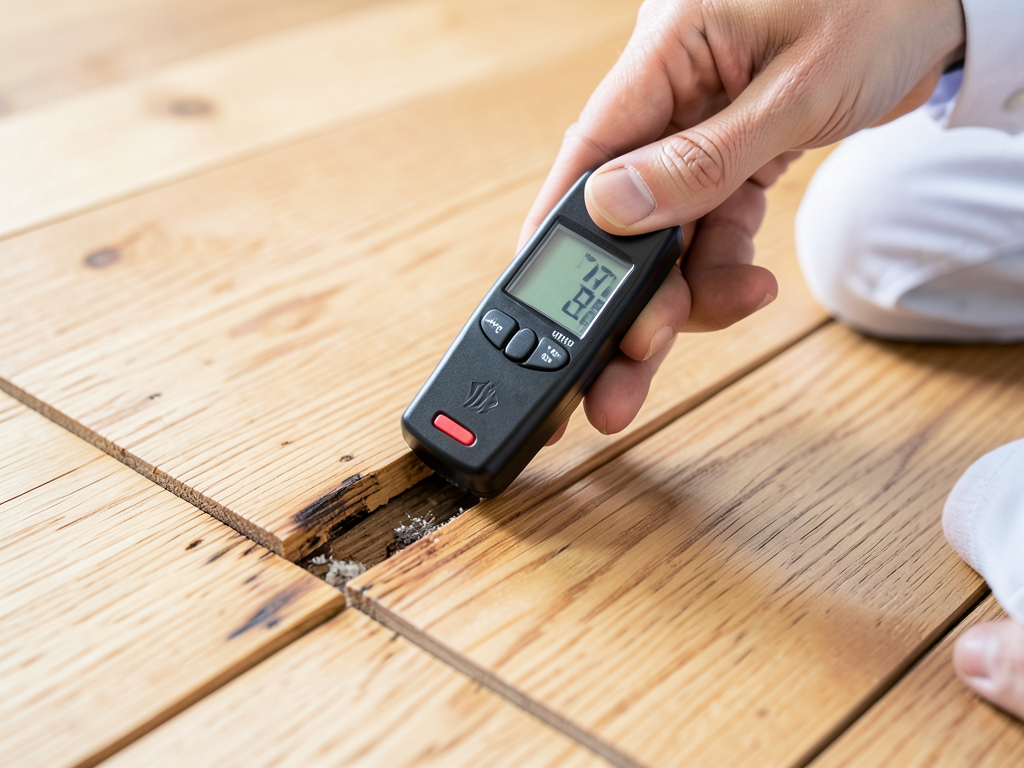
A professional assessment includes moisture meter readings, psychrometric analysis, and evaluation of your current HVAC system’s moisture removal capacity.
Frequently Asked Questions
How long does it take for humidity to damage hardwood floors?
Significant damage typically appears within 6-12 months of exposure to improper humidity levels. However, subtle changes like minor cupping can begin within weeks of sustained high humidity.
Can I use portable dehumidifiers instead of whole-home systems?
Portable units can help in specific areas but cannot maintain consistent whole-home humidity levels. They also require frequent emptying and don’t integrate with your HVAC system for coordinated control.
What humidity level should I maintain for my hardwood floors?
The National Wood Flooring Association recommends 35-55% relative humidity. In Dallas summers, aim for the lower end (45%) to account for outdoor humidity infiltration. In winter, the middle range (40-45%) prevents both drying and excessive moisture.
Will new HVAC equipment void my floor warranty?
Properly installed moisture control systems protect rather than void warranties. Most flooring manufacturers require humidity control documentation for warranty claims. Professional installation with documentation actually strengthens your warranty position.
How much does professional hardwood floor moisture protection cost?
Whole-home dehumidification systems range from $3,000-8,000 installed. Variable speed HVAC upgrades add $2,000-5,000. Smart thermostat integration costs $300-500. Total investment typically ranges $5,000-10,000 for comprehensive protection.. Read more about Choosing Hospital Grade Air Filtration for Your Dallas Medical District Home.
Take Action to Protect Your Investment
Your hardwood floors represent a significant investment that deserves professional protection. Dallas’s unique climate creates challenges that standard HVAC systems cannot overcome alone.
Don’t wait until you see visible damage. Schedule a professional moisture assessment to evaluate your current system’s effectiveness and identify vulnerabilities before they cause expensive problems.
CornerStone HVAC specializes in Dallas-specific moisture control solutions for hardwood floors. Our technicians understand the local climate challenges and building characteristics that affect your home’s moisture management.
Call us today at (972) 850-2750 to schedule your professional moisture assessment. We’ll evaluate your current system, recommend appropriate upgrades, and help you protect your hardwood floors from Dallas humidity damage.
Visit our website to learn more about our comprehensive HVAC services and how we can help preserve your home’s value through professional moisture control. For more information, visit Energy.gov humidity control guide.
You may also find this helpful. Why Your AC Keeps Turning On and Off in Your Sunnyvale Home.
{
“@context”: “https://schema.org”,
“@type”: “BlogPosting”,
“headline”: “Protecting Your Expensive Hardwood Floors From Dallas Humidity with Professional Moisture Control”,
“description”: “Dallas humidity can destroy your hardwood floors. Learn how professional HVAC moisture control protects your investment in neighborhoods like University Park and Highland Park.”,
“wordCount”: 1573,
“datePublished”: “2026-04-03T15:46:00.000Z”,
“dateModified”: “2026-04-03T15:46:00.000Z”,
“inLanguage”: “en-US”,
“mainEntityOfPage”: {
“@type”: “WebPage”,
“@id”: “https://cornerstonehvacdallas.com”
},
“publisher”: {
“@type”: “LocalBusiness”,
“name”: “Cornerstone HVAC Dallas”,
“url”: “https://cornerstonehvacdallas.com”
},
“author”: {
“@type”: “Organization”,
“name”: “Cornerstone HVAC Dallas”,
“url”: “https://cornerstonehvacdallas.com”
},
“image”: {
“@type”: “ImageObject”,
“url”: “https://cornerstonehvacdallas.com/wp-content/uploads/2026/03/protecting-your-expensive-hardwood-floors-from-dal-1.png”
}
}
{
“@context”: “https://schema.org”,
“@type”: “HVACBusiness”,
“name”: “Cornerstone HVAC Dallas”,
“url”: “https://cornerstonehvacdallas.com”,
“address”: {
“@type”: “PostalAddress”,
“addressLocality”: “Dallas”
},
“areaServed”: {
“@type”: “City”,
“name”: “Dallas”
}
}
{
“@context”: “https://schema.org”,
“@type”: “FAQPage”,
“mainEntity”: [
{
“@type”: “Question”,
“name”: “How long does it take for humidity to damage hardwood floors?”,
“acceptedAnswer”: {
“@type”: “Answer”,
“text”: “Significant damage typically appears within 6-12 months of exposure to improper humidity levels. However, subtle changes like minor cupping can begin within weeks of sustained high humidity.”
}
},
{
“@type”: “Question”,
“name”: “Can I use portable dehumidifiers instead of whole-home systems?”,
“acceptedAnswer”: {
“@type”: “Answer”,
“text”: “Portable units can help in specific areas but cannot maintain consistent whole-home humidity levels. They also require frequent emptying and don’t integrate with your HVAC system for coordinated control.”
}
},
{
“@type”: “Question”,
“name”: “What humidity level should I maintain for my hardwood floors?”,
“acceptedAnswer”: {
“@type”: “Answer”,
“text”: “The National Wood Flooring Association recommends 35-55% relative humidity. In Dallas summers, aim for the lower end (45%) to account for outdoor humidity infiltration. In winter, the middle range (40-45%) prevents both drying and excessive moisture.”
}
},
{
“@type”: “Question”,
“name”: “Will new HVAC equipment void my floor warranty?”,
“acceptedAnswer”: {
“@type”: “Answer”,
“text”: “Properly installed moisture control systems protect rather than void warranties. Most flooring manufacturers require humidity control documentation for warranty claims. Professional installation with documentation actually strengthens your warranty position.”
}
},
{
“@type”: “Question”,
“name”: “How much does professional hardwood floor moisture protection cost?”,
“acceptedAnswer”: {
“@type”: “Answer”,
“text”: “Whole-home dehumidification systems range from $3,000-8,000 installed. Variable speed HVAC upgrades add $2,000-5,000. Smart thermostat integration costs $300-500. Total investment typically ranges $5,000-10,000 for comprehensive protection.”
}
}
]
}
{
“@context”: “https://schema.org”,
“@type”: “BreadcrumbList”,
“itemListElement”: [
{
“@type”: “ListItem”,
“position”: 1,
“name”: “Home”,
“item”: “https://cornerstonehvacdallas.com”
},
{
“@type”: “ListItem”,
“position”: 2,
“name”: “Blog”,
“item”: “https://cornerstonehvacdallas.com/blog”
},
{
“@type”: “ListItem”,
“position”: 3,
“name”: “Protecting Your Expensive Hardwood Floors From Dallas Humidity with Professional Moisture Control”
}
]
}
{
“@context”: “https://schema.org”,
“@type”: “Service”,
“serviceType”: “HVAC”,
“provider”: {
“@type”: “LocalBusiness”,
“name”: “Cornerstone HVAC Dallas”,
“url”: “https://cornerstonehvacdallas.com”
},
“areaServed”: {
“@type”: “City”,
“name”: “Dallas”
},
“description”: “Dallas humidity can destroy your hardwood floors. Learn how professional HVAC moisture control protects your investment in neighborhoods like University Park and Highland Park.”
}