
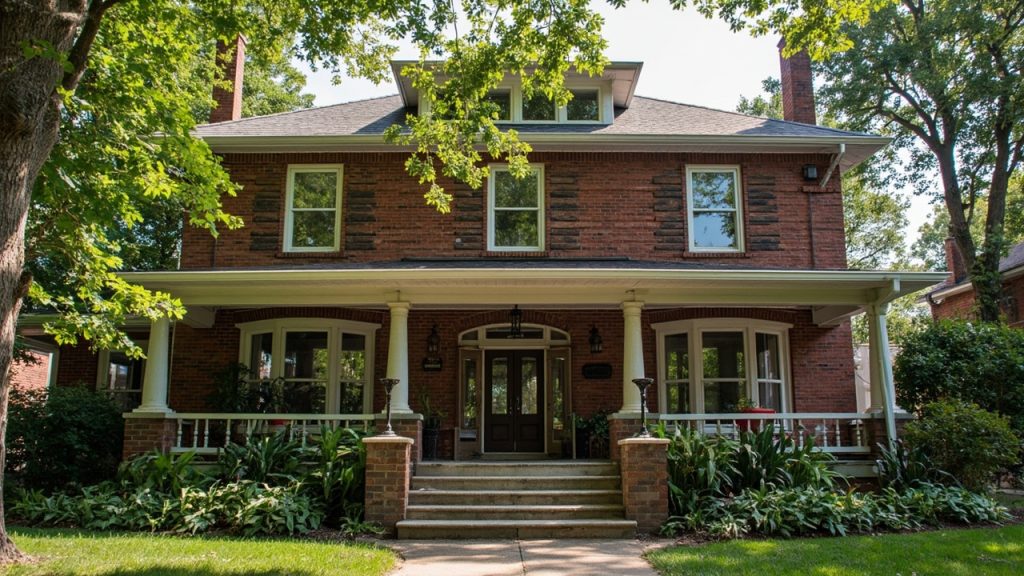
Why Your Lakewood Historic Home Needs a Custom AC Solution
Your Lakewood historic home sits on a foundation built over a century ago. The thick plaster walls, original crown molding, and carefully preserved finishes represent far more than shelter. They represent character that builders abandoned decades ago. When your home needs cooling and heating, a standard central air system threatens everything you have preserved.
Generic HVAC contractors cut holes through walls, run ductwork through attics, and install bulky equipment without understanding what they are destroying. Your home requires a different approach. A custom system respects your architecture while providing the comfort your family needs during summers that regularly exceed 100 degrees Fahrenheit.
Cornerstone Air Conditioning & Heating works exclusively with historic properties in Lakewood. We understand the engineering challenges of homes built before 1940. We know how to work with the Dallas Landmark Commission. We install systems that you cannot see from your living room.
Why Standard Central Air Fails in Historic Homes
A typical AC installation requires substantial ductwork. Contractors need to run 6-inch and 8-inch ducts through walls, attics, and crawlspaces. In a home built in 1920, these spaces contain materials that modern codes forbid disturbing. Plaster walls backed with wooden lath shatter when drilled. Knob-and-tube wiring still powers fixtures in some rooms. Ancient wood framing cannot support the weight of metal ducts filled with refrigerant lines.
Lakewood was established between 1912 and 1925. Nearly every home features 8-inch solid brick exterior walls with minimal insulation. Pier-and-beam foundations sit on Blackland Prairie clay soil, a dense clay layer common throughout the Dallas area. This clay expands significantly when wet and shrinks when dry, creating foundation movement that cracks traditional ductwork connections. Foundation movement of 1 to 2 inches over a single season is typical for homes on this soil type.
Beyond structural concerns, conventional systems create visual destruction. Crawlspace access points damage foundation aesthetics. Outdoor condensers require reinforced pads that alter the surrounding area. Attic installation forces you to lose ceiling height or sacrifice storage space permanently.
Historic homes also face moisture control challenges that modern construction never encounters. The high humidity of summer months, combined with aged materials, creates conditions where mold and mildew thrive in hidden ductwork. You cannot clean a duct system running through 1920s plaster walls.
Best HVAC Systems for Lakewood Historic Districts
Three system types work effectively in historic homes. Each offers distinct advantages and trade-offs specific to Lakewood properties.
High-Velocity Systems Like Unico and SpacePak
High-velocity systems use small diameter tubing instead of traditional sheet metal ducts. Unico and SpacePak equipment delivers cooled air through 2-inch flexible conduits that fit inside walls and attic spaces without major structural modification.
The tubing runs through walls built over a century ago without requiring the enlargement that conventional 8-inch ducts demand. Installation happens mostly inside existing cavities. A skilled technician runs lines parallel to studs and joists, securing them every few feet with adhesive clips that leave no permanent marks.
Air velocity in these systems ranges from 1,500 to 2,000 feet per minute. This speed creates jet streams that mix room air effectively, preventing the cold spots and dead zones common in historic homes with oddly shaped rooms and thick walls. The high-velocity principle means fewer supply registers are needed, reducing the number of wall penetrations your contractor must make.
Unico systems achieve SEER2 ratings between 17 and 21 depending on the compressor selected. SpacePak systems deliver comparable efficiency. Both brands include variable-speed compressors that modulate cooling output based on actual cooling demand, reducing energy consumption during mild spring and fall weather.
The equipment noise level of modern high-velocity systems ranges from 52 to 58 decibels in the living space. This compares favorably to the 60-65 decibels produced by older central air systems running at full capacity. Acoustic ducting further reduces transmission noise through walls.
Maintenance proves simpler because the small tubing allows easier access for filter changes and coil cleaning. The system components mount in accessible locations, typically a mechanical closet or attic alcove.
Ductless Mini-Split Heat Pumps
Ductless systems install an indoor air handler unit on each wall or ceiling that needs climate control. Refrigerant lines and a drain line connect to an outdoor compressor through a small opening in the wall or window frame. No ductwork runs through your home’s interior.
For Lakewood homes with multiple room zones separated by thick masonry walls, ductless systems offer zone-by-zone control. Your bedroom runs at 72 degrees while your study holds 68 degrees. Each space maintains its own thermostat independently.
Modern ductless systems deliver SEER2 ratings from 18 to 24 depending on the model and outdoor temperature conditions. They include heat pump functionality, providing efficient heating during winter freeze events. When temperatures drop below freezing, the heat pump reverses refrigerant flow to extract heat from outside air and transfer it indoors.
The visible indoor units measure roughly 28 inches wide and 8 inches deep when mounted on a wall. Mounting heights vary, but most installers position them high on walls to keep furniture arrangement unaffected. Some homeowners object to the appearance of wall units in historic spaces. Others find them acceptable once properly positioned.
Ductless systems excel in homes where ductwork retrofit proves impossible due to structural constraints. They work particularly well in homes with basements, where you can hide refrigerant lines along foundation walls.
Variable Refrigerant Flow Systems for Larger Homes
VRF technology represents the premium option for historic homes requiring multiple zones with independent control. A single outdoor compressor manages refrigerant flow to multiple indoor air handlers simultaneously. Each indoor unit operates independently, providing exactly the cooling each room needs.
VRF systems achieve SEER2 ratings above 20 across virtually all outdoor temperature conditions. They include advanced controls that learn your schedule and adjust efficiency accordingly. Smart home integration allows remote temperature adjustment through smartphone apps.
Installation requires running refrigerant lines through your home’s structure, similar to ductless systems. VRF technology allows more indoor units to share a single outdoor compressor, reducing the visual impact of outdoor equipment. A home with six rooms needing individual temperature control requires only one outdoor condenser instead of six.
VRF systems cost substantially more than high-velocity or ductless alternatives, making them suitable primarily for larger historic homes or properties where comprehensive multi-zone control justifies the investment.
| System Type | SEER2 Range | Visible Components | Best For | Maintenance Complexity |
|---|---|---|---|---|
| High-Velocity (Unico/SpacePak) | 17-21 | Minimal. Small tubing hidden in walls | Homes where ductwork retrofit is possible with careful planning | Simple. Accessible filters and coils |
| Ductless Mini-Split | 18-24 | Wall-mounted indoor units, outdoor condenser | Homes with independent room temperature needs | Moderate. Indoor filters require regular cleaning |
| Variable Refrigerant Flow (VRF) | 20+ | One outdoor unit for multiple zones | Large historic homes requiring comprehensive multi-zone control | Moderate. Professional service recommended annually |
Selection between these systems depends on your specific home layout, architectural constraints, and cooling requirements. Cornerstone conducts a detailed assessment before recommending any system.
Preserving Architectural Integrity While Modernizing Comfort
Your home preserves specific architectural details that the Dallas Landmark Commission protects. If your property sits within a designated historic district, any exterior modification requires formal approval. Interior work must follow preservation guidelines. This prevents structural damage.
The philosophy of invisible HVAC means installing systems that homeowners forget exist. You notice the comfort. You do not notice the equipment.
This approach starts with understanding what your home can accommodate. Cornerstone technicians conduct detailed inspections of attic space, crawlspace conditions, and wall cavity dimensions before proposing solutions. We measure foundation settling patterns and check for previous unsuccessful retrofit attempts. We examine the existing electrical panel and water lines to understand what space remains available.
Only after this analysis do we propose specific system types. The goal remains constant. We deliver cooling and heating with minimal visual or structural impact.
Your home’s original materials deserve protection. We work carefully around plaster walls, never cutting larger openings than necessary. We route refrigerant lines through existing conduit where possible. We locate outdoor equipment where landscaping screens it from street view. We hide indoor air handlers in basement closets or finished attics where they serve their function invisibly.
Handling Dallas Preservation Codes and Permits
Dallas maintains strict preservation guidelines for historic properties. The Dallas Landmark Commission reviews exterior modifications, interior structural work, and any changes affecting the home’s historic character. Working within these requirements is not optional. Violations result in fines and requirements to restore your home to original condition.
Your Lakewood home may sit within the Lakewood Historic District, a neighborhood protected since 1989. The district boundaries include properties built primarily between 1912 and 1935. Homes in this district require Landmark Commission approval for exterior work including outdoor condenser installation, window penetration for refrigerant lines, and roof penetration for venting.
The Dallas Landmark Commission website provides detailed guidelines for property modifications. Their design guidelines specifically address mechanical equipment placement. Condensers must sit on screened pads behind homes or sides rather than facing streets. Refrigerant line entry points must use weather-sealed fittings that prevent moisture intrusion.
Cornerstone handles all Landmark Commission coordination on your behalf. We prepare detailed site plans showing equipment placement and entry points. We attend required Commission meetings and provide technical documentation supporting our proposed installation methods. We ensure every component meets both preservation standards and current mechanical codes. Most Landmark Commission decisions complete within 2-3 weeks of application submission. Typical project timelines run 8-12 weeks from initial consultation through system startup, with most delay coming from permit processing rather than installation work itself.
Dallas Mechanical Code amendments require condensing units to maintain minimum distances from property lines and existing structures. Your home’s tight lot size may require creative equipment placement. Some Lakewood properties allow only side-yard or rear-yard condenser locations due to setback requirements.
Electrical permits are mandatory for any system installation. Dallas requires licensed electricians to perform all electrical work and file required documentation with the city. Cornerstone coordinates with your electrical contractor and ensures all work passes city inspection before system startup. Permit costs typically range from $150 to $400 depending on system complexity, with mechanical permits running $200-$300 and electrical permits $100-$200. Financing options include conventional home improvement loans, federal Property Assessed Clean Energy (PACE) programs, and utility rebates that offset 10-30 percent of qualified system costs.
Retrofitting Systems in Pier-and-Beam Foundations
Nearly all Lakewood homes rest on pier-and-beam foundations rather than concrete slabs. This construction method creates significant advantages and unique challenges for HVAC installation.
Pier-and-beam foundations sit several feet above grade, creating crawlspace areas that run beneath the entire home. This space provides ideal locations for running refrigerant lines, condensate drain lines, and return air ducts. Technicians can access these areas for maintenance without disturbing interior finishes.
Blackland Prairie clay soil underlying Dallas foundations expands and contracts seasonally. Wet clay swells, pushing foundations upward. Dry clay shrinks, allowing foundations to settle. Homes built in 1920 experience foundation movement of several inches throughout their lifespan.
This movement cracks rigid ductwork connections and loosens refrigerant line fittings. Flexible tubing handles movement better than rigid metal components. When Cornerstone installs systems in historic homes on pier-and-beam foundations, we use flexible refrigerant lines and acoustical flex ducting rather than rigid aluminum components.
These flexible connections include vibration-dampening sleeves that absorb the small movements caused by seasonal foundation shifts. The sleeves prevent metal-to-metal contact that would transmit movement sounds into the living space.
Condensate drain lines require careful routing in crawlspaces. Water must flow downhill by gravity toward a drainage point. Low spots in crawlspaces collect standing water that ruins air handler components. Cornerstone slopes drain lines properly and terminates them away from foundation piers where water could accelerate deterioration.
Indoor Air Quality and Moisture Control in Older Homes
Historic homes face indoor air quality challenges that modern construction avoids. Plaster walls absorb moisture. Wood components swell and shrink with humidity changes. Aged caulking and weatherstripping allow outside air to infiltrate freely.
Dallas humidity levels exceed 70 percent on most days during summer months. This moisture enters your home through every crack and opening. Without proper dehumidification, mold colonies establish themselves in crawlspaces, attics, and inside ductwork.
Modern high-velocity and ductless systems include variable-speed compressors that run continuously at reduced capacity during humid conditions. This extended run time removes more moisture from the air. The cooling coil reaches optimal dehumidifying temperature, condensing moisture rather than just cooling air.
A traditional central air system cycles on and off as it meets cooling setpoint. Short run times prevent effective dehumidification. Your home stays cool but feels clammy. Moisture that accumulates promotes mold growth invisible to you until foundation damage reaches advanced stages.
Cornerstone installs dedicated dehumidification equipment in historic homes. These devices run independently of the main cooling system, targeting humidity removal even during mild weather when cooling is unnecessary. They capture excess moisture before it penetrates deep into plaster and wood.
The Environmental Protection Agency addresses indoor air quality concerns specific to older homes, noting that moisture control is critical for preventing mold-related health problems and protecting structural materials.
Return air filters capture pollen and dust before they recirculate. Dallas pollen counts exceed national averages, particularly during cedar fever season from November through February. High-efficiency filtration reduces allergen exposure significantly, providing health benefits beyond basic cooling.
Energy Efficiency Upgrades for Historic Properties
Historic Lakewood homes typically include single-pane windows and minimal insulation in attic and wall cavities. These energy losses make climate control expensive. A 1,500-square-foot 1920s home with minimal insulation may consume 40 percent more cooling energy than a modern home of identical size.
Before installing new HVAC equipment, examine your home’s thermal envelope. Upgrading to double-pane windows reduces heat gain by 30 percent. Adding attic insulation without disturbing original roof materials cuts cooling load another 25 percent. Air sealing around window frames, door frames, and electrical outlets prevents conditioned air from escaping.
Federal tax credits and Dallas municipal rebates now fund these improvements. For the 2026 tax year, the federal Energy Credit allows a 30 percent income tax credit for qualified energy improvements including certain HVAC system upgrades. Dallas utilities offer rebates for air sealing work and high-efficiency system installation.
Cornerstone staff can explain which improvements offer the best return on investment for your specific home. Some upgrades pay for themselves within five years through reduced electricity consumption. Others provide comfort improvements that justify upfront costs even without immediate financial payback.
Case Study: Restoring Comfort in a Lakewood Home
A 1925 Tudor-style home in Lakewood had operated without air conditioning for 95 years. The owner inherited the property and needed cooling to make it livable during summer months. The home featured original plaster walls, coffered ceilings, and crown molding throughout.
Standard HVAC contractors provided quotes requiring attic installation with significant cutting into plaster ceiling work. The Landmark Commission indicated this would violate preservation guidelines. One contractor suggested installing multiple window units, destroying the home’s appearance entirely.
Cornerstone proposed a Unico high-velocity system with tubing routed through the crawlspace and up through walls where new openings could be sealed invisibly. The air handler mounted in a basement closet where occupants never see it. Return air ducting ran parallel to crawlspace joists without requiring support modifications.
Installation required two weeks of careful work. Technicians had to reroute existing plumbing lines in the crawlspace and coordinate with the electrician running new circuits. The outdoor condenser sat on a screened pad in the rear yard, hidden from street view by mature trees.
Upon completion, the home achieved comfortable 72-degree temperatures throughout. No visible ductwork appears in any living space. The Landmark Commission approved all work because no architectural elements were disturbed. The owner reports monthly electricity costs increased by only 18 percent despite gaining comprehensive air conditioning.
Why Choose Professional Historic Home Installation
Installing HVAC in a 100-year-old home is not a project for contractors trained only on suburban tract homes. The skills required differ substantially from standard installations.
Cornerstone technicians have each completed specialized training in historic building systems. They understand pier-and-beam foundation construction. They know how to work around plaster and lath without causing catastrophic damage. They understand preservation standards and Landmark Commission requirements.
This expertise prevents costly mistakes. A standard contractor might cut through a main structural beam thinking it was just framing. They might install equipment creating moisture problems that require foundation repair. They might violate preservation codes, leaving you responsible for restoration expenses.
Professional installation includes detailed documentation of all work performed. Photos show routing of all lines and tubing. Records document equipment specifications and performance testing results. These records prove to the Landmark Commission that work met all requirements, protecting you if future questions arise.
Warranties apply specifically to historic home applications. Equipment manufacturers honor extended coverage when installation was performed by certified technicians following their detailed guidelines.
Starting Your Historic Home HVAC Project
The first step toward reliable cooling begins with a thorough assessment of your home’s specific conditions. Cornerstone technicians examine attic framing, crawlspace drainage, foundation condition, and existing utility locations.
We evaluate your cooling needs based on home square footage, window size, sun exposure, and current comfort complaints. We discuss budget constraints and timeline requirements. We explain all available options in detail, showing you exactly what each system looks like installed.
Only after this comprehensive assessment do we provide a detailed proposal outlining the recommended system, installation methods, required permits, and complete pricing. You understand exactly what work will happen and what your home will look like when work concludes.
Contact Cornerstone Air Conditioning & Heating today to schedule your historic home assessment. We serve Lakewood with specialized expertise in historic property HVAC solutions. Call us at your earliest convenience to protect your home’s architectural integrity while gaining the comfort your family deserves.
{
“@context”: “https://schema.org”,
“@type”: “BlogPosting”,
“headline”: “Why Your Lakewood Historic Home Needs a Custom AC Solution”,
“description”: “Custom AC solutions for Lakewood historic homes built 1912-1935. Preserve architecture while staying cool.”,
“wordCount”: 2942,
“datePublished”: “2026-03-15T14:46:00.000Z”,
“dateModified”: “2026-03-15T14:46:00.000Z”,
“inLanguage”: “en-US”,
“mainEntityOfPage”: {
“@type”: “WebPage”,
“@id”: “https://cornerstonehvacdallas.com”
},
“publisher”: {
“@type”: “LocalBusiness”,
“name”: “Cornerstone HVAC Dallas”,
“url”: “https://cornerstonehvacdallas.com”
},
“author”: {
“@type”: “Organization”,
“name”: “Cornerstone HVAC Dallas”,
“url”: “https://cornerstonehvacdallas.com”
},
“image”: {
“@type”: “ImageObject”,
“url”: “https://cornerstonehvacdallas.com/wp-content/uploads/2026/03/why-your-lakewood-historic-home-needs-a-custom-ac-1.jpg”
}
}
{
“@context”: “https://schema.org”,
“@type”: “HVACBusiness”,
“name”: “Cornerstone HVAC Dallas”,
“url”: “https://cornerstonehvacdallas.com”,
“address”: {
“@type”: “PostalAddress”,
“addressLocality”: “Dallas”
},
“areaServed”: {
“@type”: “City”,
“name”: “Dallas”
}
}
{
“@context”: “https://schema.org”,
“@type”: “BreadcrumbList”,
“itemListElement”: [
{
“@type”: “ListItem”,
“position”: 1,
“name”: “Home”,
“item”: “https://cornerstonehvacdallas.com”
},
{
“@type”: “ListItem”,
“position”: 2,
“name”: “Blog”,
“item”: “https://cornerstonehvacdallas.com/blog”
},
{
“@type”: “ListItem”,
“position”: 3,
“name”: “Why Your Lakewood Historic Home Needs a Custom AC Solution”
}
]
}
{
“@context”: “https://schema.org”,
“@type”: “Service”,
“serviceType”: “HVAC”,
“provider”: {
“@type”: “LocalBusiness”,
“name”: “Cornerstone HVAC Dallas”,
“url”: “https://cornerstonehvacdallas.com”
},
“areaServed”: {
“@type”: “City”,
“name”: “Dallas”
},
“description”: “Custom AC solutions for Lakewood historic homes built 1912-1935. Preserve architecture while staying cool.”
}