
What to Do if Your HVAC Tech Can’t Safely Access Your Attic in Your Older Bluffview Home
Imagine a Dallas summer day. Your air conditioner stops working. The technician arrives but cannot get into your attic safely. The access panel is too small. The crawl space is too tight. Now what.
This situation occurs more often than you might think especially in older Dallas neighborhoods like Bluffview where homes built in the 1950s and 60s often have attic access that does not meet modern service standards. Your HVAC system might work perfectly. The problem is getting to it.
Why Attic Access Matters for HVAC Service
Attic access is not just about convenience. It is about safety and code compliance. When your HVAC technician cannot safely reach your equipment they cannot diagnose problems properly. They cannot perform maintenance. They cannot make repairs. In some cases they cannot even legally work on your system.
In Dallas the International Mechanical Code requires specific minimum dimensions for attic access. These rules exist to protect both the technician and your home. A technician working in a cramped space risks injury. They might damage your ceiling trying to squeeze through. They could even damage your HVAC equipment trying to service it without proper access.
Older Bluffview homes often present unique challenges. Many were built before modern HVAC systems existed. The original attic access was designed for storage not for servicing heavy equipment. The opening might be just 18 inches square. That is not enough for a technician to safely enter with tools.
Common Attic Access Problems in Older Bluffview Homes
Let us look at what technicians typically find in Bluffview attics. The access panel might be hidden in a bedroom closet. It could be a simple drywall cut-out with no ladder. The opening might be too small for a person to fit through comfortably. Sometimes there is no flooring at all just exposed joists.
Many Bluffview homes have pier and beam foundations. This creates crawl spaces rather than full attics. The technician might have to crawl on their stomach for 20 feet to reach the HVAC unit. That is not safe or practical for regular service.
Another common issue is the distance from access to equipment. Even if the opening meets minimum size requirements the HVAC unit might be 30 feet away. The code requires a solid walkway for anything over 20 feet. Many older homes do not have this.
Dallas Building Code Requirements for Attic Access
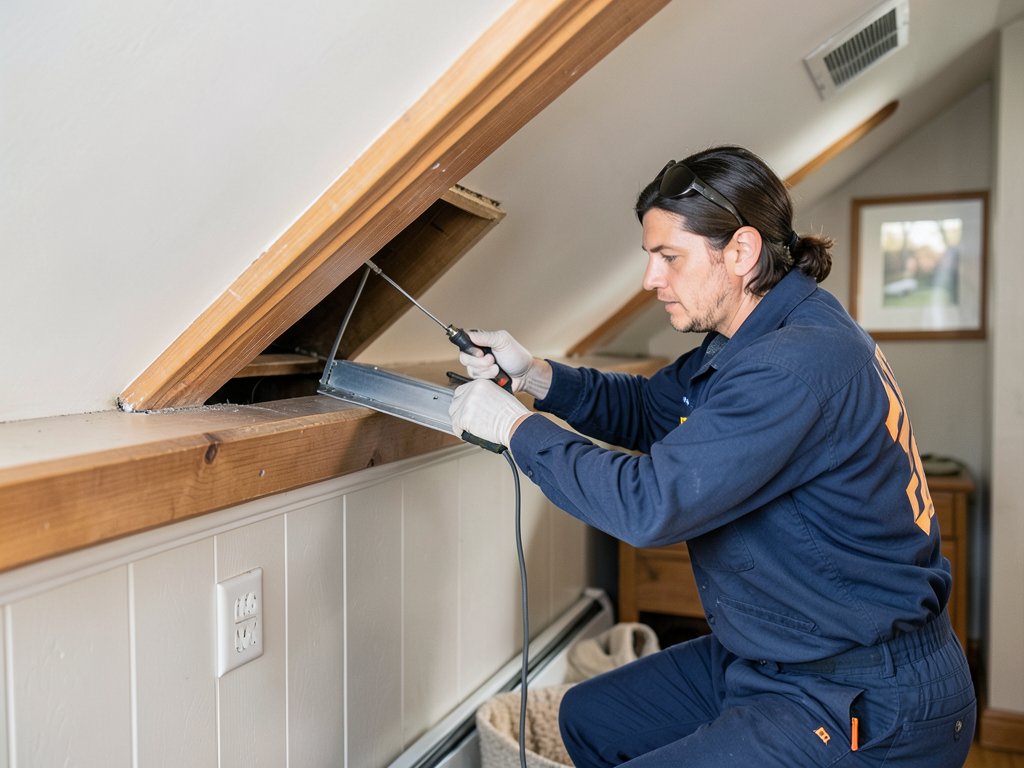
The City of Dallas follows the International Mechanical Code with some local amendments. For HVAC equipment the minimum attic access opening is 22 inches by 30 inches. That is about the size of a carry-on suitcase. If your opening is smaller than this your technician cannot legally service the equipment.
There is also a 20-foot rule. If your HVAC equipment is more than 20 feet from the access point you need a solid walkway at least 24 inches wide and 30 inches deep. This walkway must support the technician’s weight and any tools they carry.
Lighting is another requirement. There must be a light switch at the access point that controls a light near the HVAC equipment. This is not just for convenience. It is a safety requirement. Technicians need to see what they are doing especially around electrical components.
Finally there is the service receptacle requirement. A 125-volt grounded outlet must be within 25 feet of the equipment. This allows technicians to plug in their tools without running extension cords through your home.
Assessment Table: Is Your Attic Access Compliant
| Requirement | Minimum Standard | Common Problem in Bluffview | Solution Options |
|---|---|---|---|
| Opening Size | 22" x 30" | 18" x 24" or smaller | Enlarge opening professionally |
| Distance to Equipment | Within 20 feet | 30+ feet away | Install catwalk or relocate unit |
| Walkway Width | 24" minimum | No walkway just joists | Install solid flooring |
| Lighting | Switch at access + light at unit | No dedicated lighting | Install light and switch |
| Service Outlet | 125V receptacle within 25′ | No outlet in attic | Install dedicated circuit |
Steps to Fix Your Attic Access Problem
If your Bluffview home has inadequate attic access you have several options. The right solution depends on your specific situation and budget.
First get a professional assessment. An HVAC technician can measure your current access and evaluate the path to your equipment. They will check for obstacles like ductwork plumbing or low-hanging wires. This assessment costs around $150 but it is worth it to understand exactly what you are dealing with.
Second consider enlarging the access opening. This typically costs $300 to $800 depending on whether it is in a closet ceiling or hallway. The technician will cut a larger hole install a new frame and add a proper access panel with insulation and weatherstripping.
Third install a permanent ladder if you do not have one. Folding ladders that mount in the access opening cost $200 to $400. They make attic access much safer and easier. Some homeowners prefer fixed ladders for frequent access.
Fourth add flooring and lighting if needed. Installing plywood panels across the joists creates a safe walking surface. Adding a light switch and fixture at the access point plus a light near the HVAC equipment costs $250 to $500.
Finally if your equipment is too far from the access consider relocating it. This is the most expensive option often $3000 to $8000 but it might be necessary for very old systems or homes with complicated layouts.
Cost Comparison Table for Attic Access Improvements
| Improvement | Typical Cost Range | DIY Difficulty | Professional Recommended |
|---|---|---|---|
| Enlarge access opening | $300 – $800 | Hard | Yes |
| Install folding ladder | $200 – $400 | Medium | Optional |
| Add flooring panels | $150 – $350 | Easy | No |
| Install lighting circuit | $250 – $500 | Hard | Yes |
| Relocate HVAC equipment | $3000 – $8000 | Professional only | Essential |
When to Consider a Ductless Mini-Split System
Sometimes the best solution is not fixing your attic access at all. If your home has chronic HVAC problems or if you are planning a renovation consider a ductless mini-split system. These systems do not require attic access for most service tasks.
Ductless units mount on walls or ceilings. The main components stay accessible. Technicians can service them from inside your home without climbing into the attic. This eliminates the access problem entirely.
Mini-splits work especially well in Bluffview’s older homes. Many were built before central air conditioning existed. The floor plans often have rooms that are hard to heat or cool evenly. Ductless systems let you control temperatures room by room.
The installation process is also less invasive. No need to cut into ceilings for new ductwork. No need to worry about attic access. The outdoor unit goes on a concrete pad and indoor units mount to walls with small refrigerant lines running through drilled holes. How Much a New AC Installation Actually Costs in Dallas This Year.
Learn more about ductless mini-split installation for older Dallas homes.
DIY vs Professional Solutions
Some attic access improvements you can do yourself. Adding flooring panels is straightforward. You measure cut plywood and lay it across the joists. Installing basic lighting might be within your skill level if you are comfortable with electrical work.
However enlarging the access opening or installing a ladder should be done by professionals. These tasks involve structural modifications. Cutting into a ceiling means dealing with insulation electrical wires and possibly plumbing. A professional knows how to avoid damaging these systems.
Professionals also ensure the work meets code requirements. They will install proper fire-rated access covers. They will add insulation to prevent energy loss. They will make sure the ladder is mounted securely and meets safety standards.
Most importantly professionals carry insurance. If something goes wrong during the work you are protected. DIY mistakes in your attic can lead to ceiling collapses water damage or electrical fires.
Preparing for Your HVAC Service Call
Before your next HVAC service call take a few minutes to check your attic access. Remove any items blocking the closet or hallway where the access panel is located. Make sure the path to the access is clear.
If you know your access is inadequate tell the technician when you schedule the appointment. They might bring equipment to work around the problem or they might recommend specific improvements before servicing your system.
Consider taking photos of your access area. This helps the technician understand your situation before arriving. It also helps you remember what needs to be fixed later.
Finally if you are planning a system replacement discuss access requirements with your HVAC contractor during the sales process. They can factor in any necessary modifications to your attic access when giving you a complete price quote.
Local Bluffview Considerations
Bluffview’s unique character means access solutions need to be thoughtful. Many homes are historic or in historic districts. Any modifications must preserve the home’s exterior appearance and architectural integrity.
The neighborhood’s mature trees and established landscaping can complicate outdoor unit placement. Sometimes the best solution involves creative routing of refrigerant lines or ductwork through less obvious paths.
Bluffview’s proximity to White Rock Lake means higher humidity levels than other parts of Dallas. This affects both HVAC system sizing and the urgency of getting repairs done quickly when systems fail.
Local building inspectors in Dallas are particularly strict about attic access for older homes being sold or renovated. If you are planning to sell your home in the next few years addressing these issues now can prevent inspection failures later.
Finding the Right HVAC Professional
Not all HVAC technicians are equally experienced with older Bluffview homes. Look for contractors who specifically mention experience with historic properties or homes built before 1970.
Ask potential contractors about their experience with attic access modifications. A good contractor will have photos of similar projects they have completed. They should be able to explain your options clearly and provide references.
Check if the contractor is licensed in Dallas and familiar with local building codes. Dallas has specific requirements that might differ from surrounding suburbs. A contractor who works throughout the metroplex should know these differences.
Consider companies that offer both HVAC service and home performance improvements. These contractors understand how attic access affects your home’s energy efficiency not just your HVAC system’s serviceability.
Need help finding a qualified technician? Learn who to call for same-day AC service in North Dallas.
Long-term Benefits of Proper Attic Access
Investing in proper attic access pays off in multiple ways. First it makes routine maintenance easier and cheaper. Technicians can work more efficiently when they can safely reach your equipment. This often means lower service charges.
Second it prevents damage to your home. Technicians working in cramped spaces sometimes step through ceilings or damage walls trying to maneuver equipment. Proper access eliminates these risks.
Third it improves your home’s energy efficiency. Many older access panels leak air badly. Upgrading to an insulated access cover with weatherstripping can reduce your heating and cooling costs.
Finally it increases your home’s value. When you sell buyers and inspectors will appreciate having proper attic access. It is one less thing for them to worry about during the inspection process.
Ready to solve your attic access problem? Find a reliable technician who can handle your specific situation.
Frequently Asked Questions
How much does it cost to enlarge an attic access opening in Dallas?
Enlarging an attic access typically costs between $300 and $800 in Dallas. The price depends on the location of the access whether it is in a closet ceiling or hallway and whether any electrical or plumbing obstacles need to be moved.
Can I install a folding attic ladder myself?
While DIY installation is possible for experienced homeowners it is often better to hire a professional. Proper installation requires cutting into ceiling joists ensuring structural support and installing fire-rated covers. Mistakes can lead to ceiling damage or safety hazards.
What if my HVAC unit is too far from the attic access?
If your unit is more than 20 feet from the access you need a solid walkway. This can be installed as a catwalk along the attic floor. For distances over 50 feet or in very tight spaces relocating the HVAC unit might be the better solution.
Will fixing my attic access help with energy efficiency?
Yes. Many older access panels leak air badly. Upgrading to an insulated access cover with weatherstripping can reduce energy loss. Additionally proper flooring prevents insulation from being compressed which maintains your attic’s R-value.
How do I know if my attic access meets current code?
Current code requires a minimum 22" x 30" opening within 20 feet of the equipment a 24" wide walkway for longer distances proper lighting and a 125V receptacle nearby. A professional HVAC technician can assess your specific situation and identify any deficiencies.
Next Steps for Bluffview Homeowners
Do not let inadequate attic access leave you without air conditioning during Dallas’s next heatwave. Here is what to do right now.
First measure your current access opening. If it is smaller than 22" x 30" you have a code compliance issue. Second check the path from your access to your HVAC equipment. Is there a solid floor? Is the distance more than 20 feet?
Third contact a qualified HVAC contractor who understands Bluffview’s unique housing stock. They can assess your situation and recommend specific solutions. Do not wait until your system breaks down to discover you have an access problem.
Finally if you are planning any home renovations or a system replacement factor in attic access improvements from the start. It is much easier and cheaper to do this work during a larger project than as an emergency repair.
Ready to get started? Call CornerStone HVAC at (972) 850-2750 for a professional assessment of your Bluffview home’s attic access. Our experienced technicians understand the unique challenges of older Dallas homes and can recommend solutions that work for your specific situation.
Do not let inadequate attic access leave you sweating through another Dallas summer. Take action today and ensure your HVAC system can be serviced quickly and safely when you need it most.
[IMAGE_PLACEHOLDER_3>
{
“@context”: “https://schema.org”,
“@type”: “BlogPosting”,
“headline”: “What to Do if Your HVAC Tech Can’t Safely Access Your Attic in Your Older Bluffview Home”,
“description”: “Learn how to fix inadequate attic access in your Bluffview home so HVAC technicians can safely service your system. Dallas building code requirements and solutions.”,
“wordCount”: 2343,
“datePublished”: “2026-05-18T07:40:00.000Z”,
“dateModified”: “2026-05-18T07:40:00.000Z”,
“inLanguage”: “en-US”,
“mainEntityOfPage”: {
“@type”: “WebPage”,
“@id”: “https://cornerstonehvacdallas.com”
},
“publisher”: {
“@type”: “LocalBusiness”,
“name”: “Cornerstone HVAC Dallas”,
“url”: “https://cornerstonehvacdallas.com”
},
“author”: {
“@type”: “Organization”,
“name”: “Cornerstone HVAC Dallas”,
“url”: “https://cornerstonehvacdallas.com”
},
“image”: {
“@type”: “ImageObject”,
“url”: “https://cornerstonehvacdallas.com/wp-content/uploads/2026/03/what-to-do-if-your-hvac-tech-can-t-safely-access-y-1.png”
}
}
{
“@context”: “https://schema.org”,
“@type”: “HVACBusiness”,
“name”: “Cornerstone HVAC Dallas”,
“url”: “https://cornerstonehvacdallas.com”,
“address”: {
“@type”: “PostalAddress”,
“addressLocality”: “Dallas”
},
“areaServed”: {
“@type”: “City”,
“name”: “Dallas”
}
}
{
“@context”: “https://schema.org”,
“@type”: “FAQPage”,
“mainEntity”: [
{
“@type”: “Question”,
“name”: “How much does it cost to enlarge an attic access opening in Dallas?”,
“acceptedAnswer”: {
“@type”: “Answer”,
“text”: “Enlarging an attic access typically costs between $300 and $800 in Dallas. The price depends on the location of the access whether it is in a closet ceiling or hallway and whether any electrical or plumbing obstacles need to be moved.”
}
},
{
“@type”: “Question”,
“name”: “Can I install a folding attic ladder myself?”,
“acceptedAnswer”: {
“@type”: “Answer”,
“text”: “While DIY installation is possible for experienced homeowners it is often better to hire a professional. Proper installation requires cutting into ceiling joists ensuring structural support and installing fire-rated covers. Mistakes can lead to ceiling damage or safety hazards.”
}
},
{
“@type”: “Question”,
“name”: “What if my HVAC unit is too far from the attic access?”,
“acceptedAnswer”: {
“@type”: “Answer”,
“text”: “If your unit is more than 20 feet from the access you need a solid walkway. This can be installed as a catwalk along the attic floor. For distances over 50 feet or in very tight spaces relocating the HVAC unit might be the better solution.”
}
},
{
“@type”: “Question”,
“name”: “Will fixing my attic access help with energy efficiency?”,
“acceptedAnswer”: {
“@type”: “Answer”,
“text”: “Yes. Many older access panels leak air badly. Upgrading to an insulated access cover with weatherstripping can reduce energy loss. Additionally proper flooring prevents insulation from being compressed which maintains your attic’s R-value.”
}
},
{
“@type”: “Question”,
“name”: “How do I know if my attic access meets current code?”,
“acceptedAnswer”: {
“@type”: “Answer”,
“text”: “Current code requires a minimum 22" x 30" opening within 20 feet of the equipment a 24" wide walkway for longer distances proper lighting and a 125V receptacle nearby. A professional HVAC technician can assess your specific situation and identify any deficiencies.”
}
}
]
}
{
“@context”: “https://schema.org”,
“@type”: “BreadcrumbList”,
“itemListElement”: [
{
“@type”: “ListItem”,
“position”: 1,
“name”: “Home”,
“item”: “https://cornerstonehvacdallas.com”
},
{
“@type”: “ListItem”,
“position”: 2,
“name”: “Blog”,
“item”: “https://cornerstonehvacdallas.com/blog”
},
{
“@type”: “ListItem”,
“position”: 3,
“name”: “What to Do if Your HVAC Tech Can’t Safely Access Your Attic in Your Older Bluffview Home”
}
]
}
{
“@context”: “https://schema.org”,
“@type”: “Service”,
“serviceType”: “HVAC”,
“provider”: {
“@type”: “LocalBusiness”,
“name”: “Cornerstone HVAC Dallas”,
“url”: “https://cornerstonehvacdallas.com”
},
“areaServed”: {
“@type”: “City”,
“name”: “Dallas”
},
“description”: “Learn how to fix inadequate attic access in your Bluffview home so HVAC technicians can safely service your system. Dallas building code requirements and solutions.”
}