
Specialized Kitchen Ventilation and AC Needs for Deep Ellum Restaurant Owners
Deep Ellum’s vibrant restaurant scene faces unique HVAC challenges. The neighborhood’s historic buildings with exposed brick and limited rooftop space create special demands for commercial kitchen ventilation systems. Restaurant owners need solutions that handle intense heat loads while meeting Dallas building codes and preserving architectural character. Dallas Historic Preservation.
Historic Building Constraints in Deep Ellum
Deep Ellum’s historic district includes buildings from the early 1900s with distinctive features. Many restaurants occupy spaces with exposed brick walls, high ceilings, and limited rooftop access. These architectural elements affect how kitchen ventilation systems must be installed.
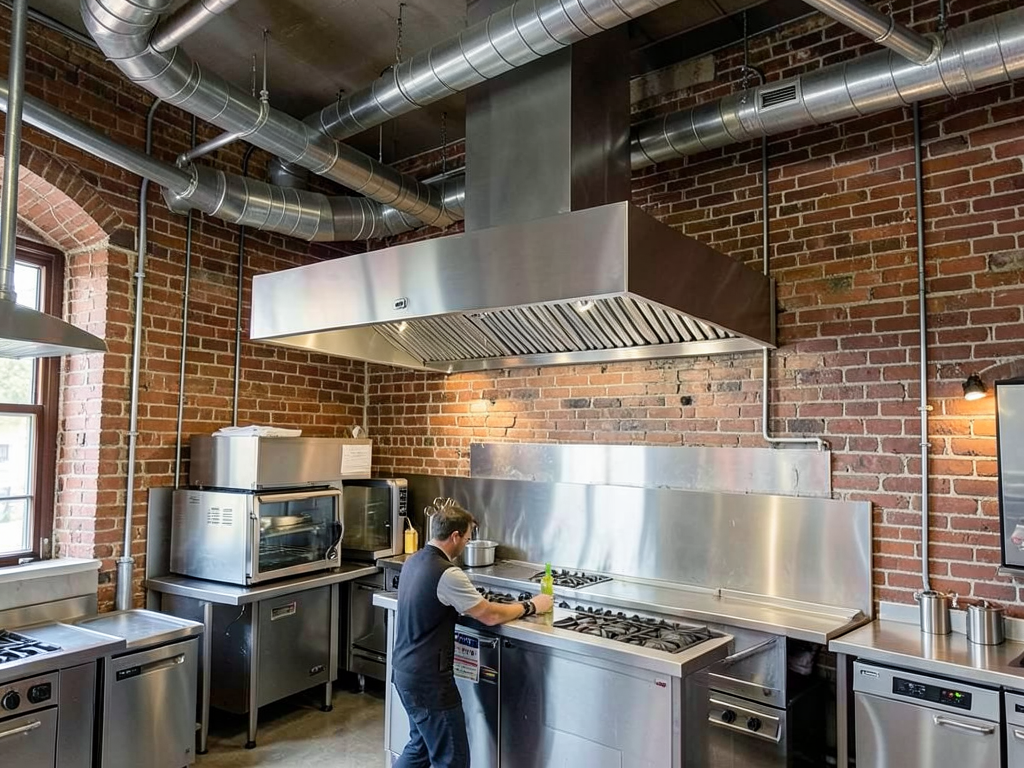
Exposed brick requires special mounting hardware for exhaust hoods and ductwork. The mortar between bricks can be fragile, making traditional mounting methods risky. We often use custom brackets that distribute weight across multiple points to protect the historic structure.
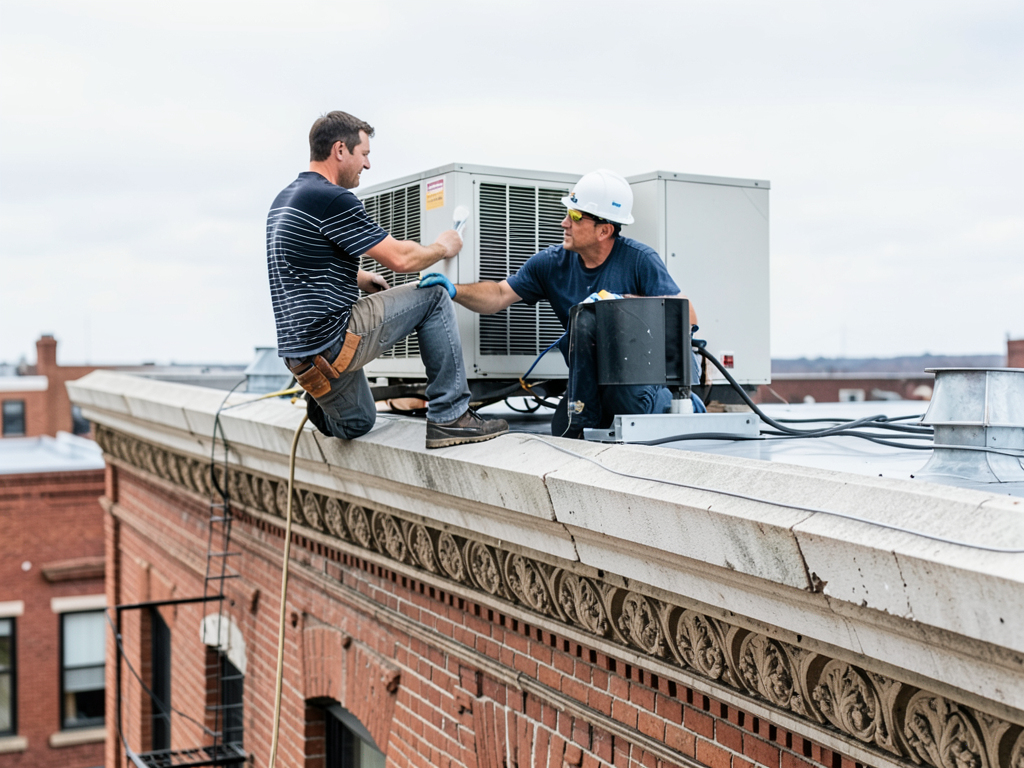
Limited rooftop space creates challenges for installing make-up air units and exhaust fans. Some buildings have pitched roofs or decorative parapets that restrict equipment placement. We design systems that maximize efficiency within these physical constraints. Installing a Ductless Mini-Split in Your M Streets Bungalow or Garage Suite.
Building codes in historic districts often require preservation of exterior appearances. This means rooftop equipment must be hidden from street view or painted to match existing colors. Some installations need approval from the Dallas Landmark Commission. How Much a New AC Installation Actually Costs in Dallas This Year.
Kitchen Exhaust Hoods and Make-Up Air Systems
Commercial kitchens in Deep Ellum need proper exhaust hood systems to remove heat, smoke, and grease vapors. The type of cooking determines which hood system works best.
Type I hoods handle grease-producing equipment like fryers, grills, and ranges. These hoods have built-in fire suppression and require specific clearance to combustible materials. Type II hoods work for steam and heat from dishwashers and ovens without open flames.
Make-up air units replace the air that exhaust hoods remove. Without proper make-up air, restaurants experience negative pressure. This causes doors to slam shut, drafts that affect cooking temperatures, and kitchen odors spreading to dining areas.
Pressure balancing prevents these issues. We calculate the exact cubic feet per minute (CFM) of air each hood removes and match it with make-up air supply. This keeps the building at neutral pressure and maintains comfortable temperatures.
Deep Ellum’s humid climate makes make-up air even more critical. Incoming air must be conditioned to remove moisture before entering the kitchen. This prevents additional humidity that would make working conditions unbearable.
NFPA 96 and Dallas Building Code Compliance
Fire safety codes govern commercial kitchen ventilation. NFPA 96 establishes national standards for exhaust systems, but Dallas adds local requirements that affect Deep Ellum installations. NFPA 96 standards.
Grease duct construction must meet specific insulation requirements. In Deep Ellum’s historic buildings, we often work with limited space above ceilings. This requires custom-fabricated duct sections that maintain proper clearances while fitting tight spaces.
Fire suppression systems need specific nozzle placement and agent types based on cooking equipment. Deep Ellum restaurants often have open kitchens where customers can see cooking areas. This requires systems that are both effective and visually unobtrusive.
Dallas requires regular inspection and cleaning of grease removal devices. We help restaurants establish maintenance schedules that comply with local codes while minimizing disruption to business operations.
Building permits for kitchen ventilation work in Deep Ellum must address both modern safety requirements and historic preservation concerns. Our team coordinates with city inspectors to ensure all work meets current standards.
Energy Efficiency and Cost Management
High-efficiency kitchen ventilation systems reduce operating costs significantly. Variable speed drives on exhaust fans adjust airflow based on cooking activity. This saves energy during slow periods while maintaining proper ventilation.
Heat recovery systems capture waste heat from exhaust air and use it to preheat make-up air. In Deep Ellum’s climate, this can reduce heating costs during winter months and reduce cooling loads year-round.
Demand-controlled kitchen ventilation systems use sensors to monitor heat and smoke levels. Fans operate at higher speeds only when needed, reducing energy consumption by up to 50% compared to constant-volume systems.
LED lighting in exhaust hoods provides better visibility for cooking while using less electricity than traditional bulbs. This also reduces heat output, helping maintain kitchen temperatures.
Emergency Repair and Maintenance Services
Kitchen ventilation failures can force restaurants to close immediately. Deep Ellum’s late-night entertainment scene means equipment must work during extended hours. We offer 24/7 emergency repair services specifically for restaurant owners. Who to Call for Same-Day AC Service in University Park and North Dallas.
Common emergency issues include exhaust fan motor failures, control system malfunctions, and grease buildup causing airflow restrictions. Our technicians carry common replacement parts to minimize downtime.
Preventative maintenance prevents most emergency calls. We recommend quarterly inspections for busy Deep Ellum restaurants. This includes checking fan belts, cleaning filters, testing fire suppression systems, and verifying airflow rates.
Maintenance schedules consider restaurant operating hours. We perform most work during off-peak times to avoid disrupting service. Some restaurants schedule maintenance on their slowest days or during renovation periods.
Recent Deep Ellum Projects
We’ve completed numerous kitchen ventilation projects throughout Deep Ellum. Each presented unique challenges based on building age, cooking style, and owner requirements.
A barbecue restaurant on Elm Street needed a high-capacity Type I hood system for their wood-fired smoker. The building’s limited rooftop access required us to design a system with the exhaust fan mounted inside the kitchen, using a short vertical duct to the roof.
A craft brewery and restaurant on Main Street combined food service with brewing operations. This required separate ventilation systems for the kitchen and brewing area, with make-up air units sized for both operations.
A pizza restaurant in a converted warehouse needed a system that preserved the building’s industrial aesthetic. We installed exposed ductwork painted to match the decor while meeting all ventilation requirements.
A vegan cafe on Commerce Street required a Type II hood for their steam-based cooking equipment. The system needed to be quiet to maintain the restaurant’s peaceful atmosphere while providing adequate ventilation.
Choosing the Right HVAC Partner
Restaurant owners need HVAC contractors with specific experience in commercial kitchen systems. Deep Ellum’s unique building stock and busy restaurant scene require specialized knowledge.
Look for contractors with experience in historic building renovations. They should understand how to preserve architectural features while installing modern systems. Ask for references from other Deep Ellum restaurant owners.
Verify that contractors understand local building codes and can navigate the permit process. They should be familiar with Dallas Landmark Commission requirements if your building is in the historic district.
Choose a company that offers comprehensive services including design, installation, maintenance, and emergency repair. This ensures consistent quality and accountability throughout the system’s life. Indoor Air Quality Solutions.
Energy efficiency expertise is crucial for controlling operating costs. Ask about high-efficiency options and potential energy savings from different system designs.
Cost Factors and Budgeting
Kitchen ventilation system costs vary based on several factors. Building constraints in Deep Ellum often increase installation complexity and cost.
Historic buildings may require additional structural reinforcement to support heavy equipment. This can add significant cost but is necessary for safety and code compliance.
Custom ductwork fabrication for tight spaces or unusual layouts increases material and labor costs. However, this often provides better long-term performance than trying to force standard components into difficult spaces.
Energy-efficient equipment has higher upfront costs but provides ongoing savings through reduced utility bills. Many restaurants recover the additional investment within two to three years through energy savings.
Permit fees and inspection costs vary by project scope. Deep Ellum projects may have additional fees related to historic district requirements.
Future Trends in Kitchen Ventilation
Kitchen ventilation technology continues to evolve. Smart systems now monitor cooking activity and adjust ventilation automatically. This improves energy efficiency while maintaining proper air quality.
UV-C light systems installed in exhaust ducts help break down grease particles and reduce fire hazards. These systems also help control odors, which is important in Deep Ellum’s dense restaurant district.
Advanced filtration systems can remove smaller particles from exhaust air, improving neighborhood air quality. This becomes more important as Deep Ellum continues to develop as a mixed-use area.
Integration with building management systems allows centralized control of all HVAC components. This provides better energy management and easier troubleshooting when issues arise.
Getting Started with Your Project
The first step in any kitchen ventilation project is a thorough site evaluation. We assess your building’s constraints, your cooking equipment needs, and your budget to recommend appropriate solutions.
Design development includes detailed drawings showing equipment placement, ductwork routing, and electrical requirements. We coordinate with other trades to ensure all systems work together properly.
Installation typically takes one to two weeks for a complete system, depending on complexity. We work with restaurant owners to minimize disruption to business operations.
Post-installation testing verifies that all systems meet design specifications and code requirements. We provide documentation for your records and train your staff on basic system operation.
Ongoing maintenance keeps your system operating efficiently and prevents costly breakdowns. We offer service plans tailored to your restaurant’s specific needs and operating schedule.
Frequently Asked Questions
How often should kitchen exhaust hoods be cleaned?
Cleaning frequency depends on cooking volume and type. High-volume restaurants cooking with grease typically need monthly cleaning. Lower-volume operations might clean quarterly. Dallas codes require cleaning at intervals that prevent grease accumulation.
Can I install a kitchen ventilation system in a historic building?
Yes, but it requires careful planning. We specialize in historic building installations and understand how to preserve architectural features while meeting modern ventilation requirements. Some projects need approval from preservation boards.
What size make-up air unit do I need?
The make-up air unit size matches your exhaust hood capacity. For every cubic foot of air your hood removes, you need an equal amount of make-up air. We calculate this based on your specific hood configuration and building pressure requirements.
How much does a commercial kitchen ventilation system cost?
Costs range from $15,000 to $75,000 or more, depending on system complexity, building constraints, and equipment quality. Deep Ellum’s historic buildings often add to installation costs due to custom work requirements.
Do I need fire suppression with my kitchen hood?
Type I hoods for grease-producing equipment require automatic fire suppression systems. Type II hoods for steam and heat typically don’t need suppression. Local codes and insurance requirements may mandate specific protection levels.
Take Action Today
Your restaurant’s success depends on reliable kitchen ventilation. Don’t wait for equipment failure to force emergency repairs that could close your business. We understand Deep Ellum’s unique challenges and have the experience to provide effective solutions. Finding a Reliable Tech for Emergency AC Repair in Highland Park.
Call us at (972) 850-2750 to schedule a free consultation. We’ll evaluate your current system, discuss your needs, and provide a detailed proposal for any required upgrades or new installations.
Deep Ellum restaurant owners trust us because we combine technical expertise with understanding of the neighborhood’s specific requirements. From historic building constraints to late-night operating schedules, we design systems that work for your business.
Don’t let ventilation problems affect your food quality, employee comfort, or customer satisfaction. Contact us today and keep your Deep Ellum restaurant running smoothly.
You may also find this helpful. Comparing Air Scrubbers and UV Lights for Better Health in Grapevine.
{
“@context”: “https://schema.org”,
“@type”: “BlogPosting”,
“headline”: “Specialized Kitchen Ventilation and AC Needs for Deep Ellum Restaurant Owners”,
“description”: “Deep Ellum restaurant owners need specialized kitchen HVAC solutions. Learn about grease hood systems, make-up air, and Dallas compliance for historic buildings.”,
“wordCount”: 1875,
“datePublished”: “2026-04-12T07:19:00.000Z”,
“dateModified”: “2026-04-12T07:19:00.000Z”,
“inLanguage”: “en-US”,
“mainEntityOfPage”: {
“@type”: “WebPage”,
“@id”: “https://cornerstonehvacdallas.com”
},
“publisher”: {
“@type”: “LocalBusiness”,
“name”: “Cornerstone HVAC Dallas”,
“url”: “https://cornerstonehvacdallas.com”
},
“author”: {
“@type”: “Organization”,
“name”: “Cornerstone HVAC Dallas”,
“url”: “https://cornerstonehvacdallas.com”
},
“image”: {
“@type”: “ImageObject”,
“url”: “https://cornerstonehvacdallas.com/wp-content/uploads/2026/03/specialized-kitchen-ventilation-and-ac-needs-for-d-1.png”
}
}
{
“@context”: “https://schema.org”,
“@type”: “HVACBusiness”,
“name”: “Cornerstone HVAC Dallas”,
“url”: “https://cornerstonehvacdallas.com”,
“address”: {
“@type”: “PostalAddress”,
“addressLocality”: “Dallas”
},
“areaServed”: {
“@type”: “City”,
“name”: “Dallas”
}
}
{
“@context”: “https://schema.org”,
“@type”: “FAQPage”,
“mainEntity”: [
{
“@type”: “Question”,
“name”: “How often should kitchen exhaust hoods be cleaned?”,
“acceptedAnswer”: {
“@type”: “Answer”,
“text”: “Cleaning frequency depends on cooking volume and type. High-volume restaurants cooking with grease typically need monthly cleaning. Lower-volume operations might clean quarterly. Dallas codes require cleaning at intervals that prevent grease accumulation.”
}
},
{
“@type”: “Question”,
“name”: “Can I install a kitchen ventilation system in a historic building?”,
“acceptedAnswer”: {
“@type”: “Answer”,
“text”: “Yes, but it requires careful planning. We specialize in historic building installations and understand how to preserve architectural features while meeting modern ventilation requirements. Some projects need approval from preservation boards.”
}
},
{
“@type”: “Question”,
“name”: “What size make-up air unit do I need?”,
“acceptedAnswer”: {
“@type”: “Answer”,
“text”: “The make-up air unit size matches your exhaust hood capacity. For every cubic foot of air your hood removes, you need an equal amount of make-up air. We calculate this based on your specific hood configuration and building pressure requirements.”
}
},
{
“@type”: “Question”,
“name”: “How much does a commercial kitchen ventilation system cost?”,
“acceptedAnswer”: {
“@type”: “Answer”,
“text”: “Costs range from $15,000 to $75,000 or more, depending on system complexity, building constraints, and equipment quality. Deep Ellum’s historic buildings often add to installation costs due to custom work requirements.”
}
},
{
“@type”: “Question”,
“name”: “Do I need fire suppression with my kitchen hood?”,
“acceptedAnswer”: {
“@type”: “Answer”,
“text”: “Type I hoods for grease-producing equipment require automatic fire suppression systems. Type II hoods for steam and heat typically don’t need suppression. Local codes and insurance requirements may mandate specific protection levels.”
}
}
]
}
{
“@context”: “https://schema.org”,
“@type”: “BreadcrumbList”,
“itemListElement”: [
{
“@type”: “ListItem”,
“position”: 1,
“name”: “Home”,
“item”: “https://cornerstonehvacdallas.com”
},
{
“@type”: “ListItem”,
“position”: 2,
“name”: “Blog”,
“item”: “https://cornerstonehvacdallas.com/blog”
},
{
“@type”: “ListItem”,
“position”: 3,
“name”: “Specialized Kitchen Ventilation and AC Needs for Deep Ellum Restaurant Owners”
}
]
}
{
“@context”: “https://schema.org”,
“@type”: “Service”,
“serviceType”: “HVAC”,
“provider”: {
“@type”: “LocalBusiness”,
“name”: “Cornerstone HVAC Dallas”,
“url”: “https://cornerstonehvacdallas.com”
},
“areaServed”: {
“@type”: “City”,
“name”: “Dallas”
},
“description”: “Deep Ellum restaurant owners need specialized kitchen HVAC solutions. Learn about grease hood systems, make-up air, and Dallas compliance for historic buildings.”
}